
What really happens during a prison visit? Most people never see beyond the security gates—however every visit leaves a lasting impact.
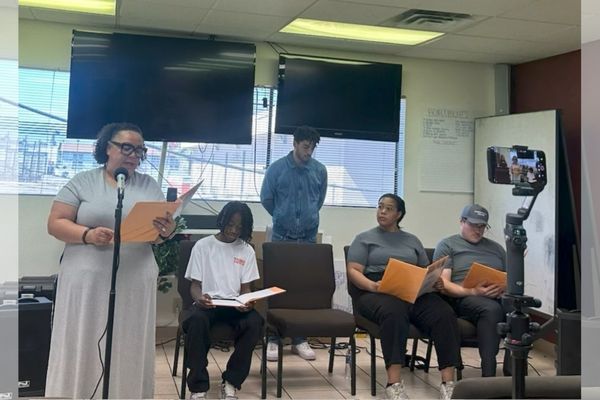
In this powerful recorded theatrical experience, you’ll step into one prison visit through the eyes of those living it: a child, a grandmother, an incarcerated parent, a registration staff member, and a correctional officer. Inspired by the real experiences of families, incarcerated individuals, and prison staff, each perspective reveals a different side of the same moment.
There are no easy answers—only the human experiences that unfold on both sides of the bars. Listen with an open mind and discover how a single visit can shape lives in ways few people ever see.
—
Listen to the podcast here
Walk In Our Shoes – Exploring Prison Visitation
Everyone, welcome to the show where we raise awareness one story at a time. I am your host, Julia Lazarich, advocate, author, and fellow traveler on this path. I am the author of the Prison: The Hidden Sentence™: WHAT TO DO WHEN YOUR LOVED ONE IS ARRESTED AND INCARCERATED that is available on Amazon. This episode is something different. We are bringing you a recording of a live play called Walk in Our Shoes, a theatrical portrayal inspired by real experiences from families, children, incarcerated individuals, and staff. It explores one profound question.
What does a prison feel like for everyone involved? You will meet a child visiting a parent, a grandmother balancing love and responsibility. An incarcerated parent holding onto connection. A registration staff member and a correctional officer keeping everyone safe. There are stories we have woven together to show how a single visit touches everyone on both sides of the bars. Step into their shoes, see through their eyes, feel what they feel. Let us walk together. Here is Walk in Our Shoes.
—
Introducing ‘Walk In Our Shoes’: The Reality Of Prison Visits
You will experience the story of a prison visit told through a series of voices, each one representing someone impacted by incarceration from a different place in the system. A child, a grandmother, a prison intake administrator, a correctional officer, and a father who is incarcerated. When most people think about incarceration, they often focus only on the person behind the bars. Incarceration reaches far beyond prison walls. Impacts children, caregivers, loved ones, and even the professionals working inside the system every day.
In Our Shoes invites us to step into those experiences. It asks us to consider what it feels like to be the child walking through the metal detector for the first time, a grandmother trying to stay strong for her family, staff carrying out rules inside of a stressful system, and the parent waiting for the chance to see their child. Families impacted by incarceration often carry what we call hidden sentences.
They did not commit the crime, yet they live with the emotional, social, and practical consequences of incarceration every day. This story shows how the same prison visit can unfold in two very different ways. An unprepared visit where confusion, fear, and stress take over, and a prepared visit where information, understanding, and support can make room for connection. Through these voices, we hope to humanize everyone connected to incarceration.
Not only the person inside, but also the family members waiting outside and the professionals working within the system. When we understand each other’s experiences, we begin to build compassion, connection, and stronger support for families impacted by incarceration. Let us begin with the voice of Jaden, a child preparing to visit his father for the first time and his grandmother and caretaker, Miss Lucy, whose son is incarcerated.
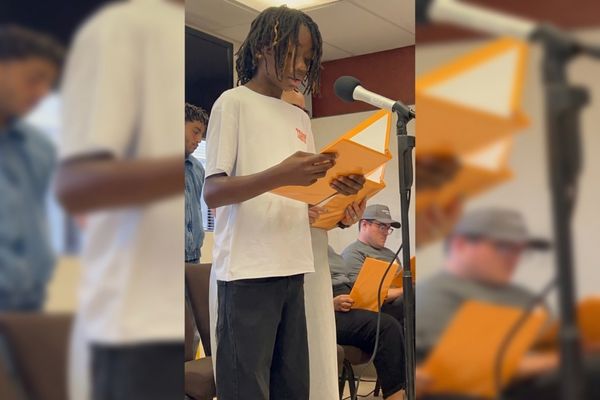
My grandma just told me we are going to a prison to see my dad. I am twelve, so I know what a prison is, but knowing about it and actually going are totally different things. My brother Marcus is eight. He does not really get it yet. He keeps asking me stuff I do not know how to answer, like, “Is it scary? Will Dad look different? Can we bring him anything?” I just keep saying, “I do not know, Marcus. I do not know.” That is the thing nobody tells you about being the older one. Everybody expects you to keep it together, but I am scared too. I just cannot show it.
The whole week before was weird. Grandma seemed so far away even when she was standing right next to us. She would start saying something and forget to finish it. She was not sleeping. I could hear her at night. I wanted to ask her stuff like, “How long will Dad be there? Why did no one tell us sooner? What are even the rules at a prison?” Every time I tried, she looked so tired. I just did it. I kept it in. I made sure Marcus ate dinner and did his homework because that is my job now. The night before, Marcus kept coming into my room saying his stomach hurt.
I told him it was probably just nerves and everything was going to be fine. I do not know if I believe that, but it is what I said. I did not sleep much either. I kept going through all these what-ifs in my head. What if I freeze up and do not know what to say to Dad? What if Marcus starts crying in front of everybody? What if I mess up some rule and they make us leave by the time Grandma called us to get up? I have been staring at the Zoom for hours. My shoulders felt like rocks. My jaw hurt. I just kept telling myself, “Get through today. Hold it together for Marcus, for Grandma, for Dad.”
I am finally able to see my son after all of this time. I cannot even celebrate this upcoming reunion because there is so much to think about. That darn car of mine needs to be serviced before I can drive five and a half hours to Batesville Prison. I have never been to a prison before. My mind is racing. I keep forgetting to take my blood pressure medication. I need to use GPS to get there, yet I do not know how. Marcus seemed to need more attention, but I have to figure out so much.
I need to find out what to wear, but calling the prison is not working out. They do not answer the phone. I have heard horror stories about people getting turned away. This is stressing me out. How would Jaden and Marcus adjust to the prison visit? I have no idea. I am so stressed. Finally, the day has come for the prison visit. Honestly, I did not sleep well last night. I woke Jaden up at 5:30 to get dressed so that we could make it to Batesville on time.
I am nervous about driving outside my little town. We have five and a half hours of driving ahead of us. I hope we make it on time. Thoughts keep circling in my brain. I forgot to explain to Jaden and Marcus what to expect at the prison. I did not even know what to expect. I feel selfish thinking about myself. I do not even remember the drive.
Now that we have heard from the family, how can you relate to how they’re feeling? Next, we’re going to hear from the prison staff. First, the receptionist, and then the correctional officer.
Firsthand Perspectives: Staff And Family Stressors
My head and shoulders have been tight with tension for the past weeks. Facing this divorce is not easy. Every conversation with my husband results in me feeling threatened as he belittles me and makes me feel like I am not doing a good job as a mother. It feels so bad to see my daughter caught in the middle of this confrontation. She loves her dad, yet I cannot seem to stop myself from worrying. Work has been so hectic.
My job working in the prison visiting reception area is a nightmare. People come through the line unprepared, and I am starting to hate this job. My boss is on my case every day. Here it is five days after the major blow-up with my ex, and now my daughter is going to spend the night with him and his new girlfriend. I dropped my daughter off at my ex’s house on Friday, and he knows that I am supposed to go to work on Saturday morning.
My daughter was supposed to be home with me on Friday night. Now it’s Saturday. Where is she? I hate to go to work with this on my mind. I did not get any sleep. I have got a boss who looks over my shoulder, and I feel like I am about to have a meltdown. My life is falling apart. Now I need to arrive at 7:00 AM at the visiting area with a migraine. I just want to bury my head in the covers and sleep all day.
I find myself reflecting on what my life has become. I am getting older, and what do I have to show for it? Mom is in assisted living care. This adds to the bills. She is not doing well at all. I feel like I am caught between a rock and a hard place. My life seems to always be centered on someone else. Here I am in this small town, Batesville, working in this prison. It is close to Mom’s assisted living quarters, but everything seems to be spiraling out of control. I need this job. The prison is short-staffed, and this adds tension on so many levels.
My boss assigned me to the prison tier, and there is so much tension. Everyone is complaining about the broken toilets, and this prison is so hot. It is unbearable. Everyone is yelling and complaining, saying that the cells are hot and I cannot do anything about that. I keep telling management they need to do something before trouble breaks out. Boy, the week went by fast. I was only on the tier for a week, and it felt like a year of exhaustion.
I am drinking more than normal, and I really feel like crap now. On top of it all, my boss says that I have to work on Saturday in the visitation room. While this is a pretty good gig, I have to be the one to tell people about the new rules that the warden implemented. Visitors can only hug at the very beginning and the end of the visit. This means that I have to be the bad guy to terminate the visit if the rule is broken.
A lot of times we do not think about what the staff is going through when we think of a prison visit and what is going on in their lives. Next, we will hear from the incarcerated person, Jaden’s father, and Ms. Lucy’s son, Mr. John Bowman.
I keep telling myself that all I need to do is get through this week and I can finally see my son and mother for a visit. I have been feeling so much anxiety all week that I have been calling my mother again and again to make sure that she is still coming. I traded off my canteen money in exchange for use of someone else’s phone time. I feel bad because I know she is on a fixed income, yet I cannot help myself. I am tense, and I feel like I am losing my breath. On one hand, I get angry. On the other hand, I am fed up with this place.
I have got a six-year bid, and I do not know how in the world I am going to make it. Trying to lay low and keep myself away from all this drama. It’s hot as heck in this place. Everyone is on edge, and honestly, arguments keep breaking out over stupidity. I understand why. We do not have enough showers and toilets for this tier in the first place.
The one thing that brings me peace and calm is reading. Yet I know my eyes are suffering from this dim light. Now here it is, the day before the visit. Could not everyone just try to get through the night? The warden has shut down visits for this tier. They say anyone who has telltale signs of being involved in the disturbance that broke out might not get their visiting privileges restored. I hate this place.
Deconstructing The Challenges Of Unplanned Prison Visits
What you just witnessed was an unplanned prison visit. A visit filled with stress, confusion, emotion, and rules that can quickly overwhelm everyone involved. For many families, even getting through the doors can feel like a test of patience, dignity, and endurance. Every visit happens without preparation. Let us take a look at how they felt about the unprepared visit, starting with Jaden.
The drive felt like forever. Marcus sat next to me in the backseat, and about halfway there he just grabbed my hand. Did not say anything, just held on. I did not let go either. When we got there, I tried to make everything go fast, like scope it out before Marcus saw it so I could explain stuff to him before it happened. That is what I do now. I tried to help him. The building was way bigger than I thought it would be, more serious.
There were signs everywhere, but they did not make sense if you did not know what you were doing. We did it. The metal detectors were rough. Marcus walked through, and his keychain set off the detector. This loud buzzer went off, and this guard stepped toward him. Marcus looked at me like he thought he was going to get arrested or something. I wanted to go over to him, but I did not know if I was allowed to move. I did not know any of the rules. Nobody had told us any of the rules. They figured it out. It was the keychain, and Marcus handed it over.
By then his hands were shaking. I just kept trying to make eye contact with him, like, “You are okay.” When we finally got into the visiting room, Marcus stopped right at the door, just frozen. I pinned my hand on his back and said, “Come on, Dad’s in here.” Dad got him moving. When we saw Dad, Marcus ran straight to him. Dad grabbed him and held on, and I just watched that and felt something I did not really have words for, like relief and sadness at the same time because it had been a really long time. I hugged. Somebody told us that was it.
One hug at the start, no more touching after that. I nodded as I understood. Marcus did not get it, though. He kept pulling his chair closest to Dad’s, not understanding why he couldn’t just lean on him. Nobody explained it to him. They just kept watching him. Dad kept asking me questions, and I kept giving him short answers, not because I did not have anything to say, but because I couldn’t figure out how to say real stuff in a place like that with people watching. He asked how school was going. I said, “Fine.” Was I playing ball? I said, “Sometimes.” Was I helping grandma? I said, “Yes.” Am I? I am helping grandma. I am helping Marcus. I am handling a lot of stuff.
Jaden’s story gives us a window into something that is rarely seen. The experience of an older sibling stepping into a caregiver role in the middle of his own confusion and fear. At twelve, Jaden is old enough to understand that his father is incarcerated, but not old enough to have the emotional tools to process it on his own. He is holding space for his little brother, managing his grandmother’s stress from a distance, and suppressing his own fear and grief so that everyone around him can stay together. This is what we sometimes call the invisible weight.
Children like Jaden do not break down in visible ways. They become quiet, watchful, and self-contained. To adults, they can look mature, even capable, but underneath they are carrying an enormous load. Jaden could not explain the rules to Marcus because he had no one to explain them to him. He could not calm his brother’s fears because no one had addressed his own. He spent the visit monitoring the room instead of connecting with his father, not because he did not want to connect, but because he did not know how to let himself.
When we talk about the hidden sentence, we often think about the youngest children, but Jaden reminds us that the older children carry it too. Often in silence, often while taking care of others, often while convincing everyone around them that they are fine. I want you to think for a moment about what Jaden was holding in that room. He was managing his own fear. He was watching his little brother. He was greeting the guards. He was answering his father in one word at a time, not because he had nothing to say, but because no one had given him a way to say it.
Now imagine carrying that weight, visit after visit, and never having anyone ask how you are doing, not as the big brother, not as grandma’s helper, just as a kid. This is exactly why programs that support children with incarcerated parents are so important. Programs that see both Marcus in the room and Jaden. When young people have a safe space to ask questions, express their feelings, and be seen as children rather than caretakers, something begins to shift. Children with incarcerated parents are serving a sentence they never deserved. When we support them, all of them, we will help lift the hidden sentence they carry. Now let us hear from Miss Lucy, his grandmother, and Mr. John Bowman’s mother.
Children with incarcerated parents are serving a sentence they never deserved. Share on XThe Grandmother’s Perspective: Navigating Unprepared Visitation
I was all set up and ready to make that five and a half hour drive to Batesville prison with Jaden and Marcus in the backseat. I got them buckled in, and we headed out. Not too long into the drive, I realized I forgot to bring anything to keep them busy. No toys, no games, and my phone was being used for directions, so they could not even play on that. There I was driving with all kinds of things running through my mind. My son was incarcerated. Jaden and Marcus’ mama was gone. Now here I was trying to hold everything together for them while worrying about what kind of future they were going to have.
The more I drove, the more my mind started spinning. Everything just kept piling up. My son’s incarceration, the boys’ mother disappearing, how much the boys have already been through. I kept wondering whether I was dressed right for the prison dress code. What if they turned us away after all that driving? By the time we got to the prison, I could already feel the stress building. The line to get in wrapped all the way down the sidewalk, and while we were standing there, I watched people in front of me get turned away. My heart started beating so hard I could feel it in my chest.
I was already tired from the long drive, and standing that long was hard on my legs. I kept thinking, “Please just let us get through this.” Finally, we made it to the receptionist’s desk. They checked our paperwork, and thank goodness we made it through that part. The metal detector came. That metal detector scared Marcus. I could see it all over him. His little body got stiff, and that loud noise startled him. He got stopped for the first time because he had a keychain in his pocket. That held up the line, and I just knew people behind us were getting irritated.
When it was my turn, the detector went off too because of the metal in my shoes. We were going back and forth, trying again, holding up the line, and my stress was rising by the second. By then I was sweating. I could feel the sweat running down the back of my blouse and sticking to me. I was hot. I was embarrassed. I was trying so hard to stay calm for the boys. Once we finally got through security, we ended up in this waiting room with cold metal chairs facing a big glass window. Behind it was that massive prison building where the visiting hall was. Sitting there waiting to be called, I did not even understand the process.
They were calling names over the intercom one at a time by last name. I kept wondering, “Are they calling the incarcerated person’s name or the visitor’s name? Did I miss ours?” After everything we had already gone through, I wasn’t about to go back up to that front desk and ask another question. I had had enough. I just watched the other families. I watched them go through those gates, and for a moment they looked like they were standing in a cage. The outside door would close behind them, and then they would wait until a guard opened the next gate so they could walk down that fenced sidewalk towards the visiting hall.
I am telling you, watching that, I felt like crying. I was nervous. I was sad. I was trying to prepare myself to see my son. I kept thinking, “What is he going to look like? What will he be wearing? What am I supposed to say? How do I keep the conversation going? How am I going to keep Marcus sitting still? How do I smile and act cheerful when my heart is breaking?” All those thoughts were running through my head so fast, they gave me a headache. Finally, we got through. When I looked up, I saw my son John from a distance. He looked healthy but tired.
There was something in his face, like he was carrying so much on his mind. I felt awful. I put a smile on my face anyway, because what else was I supposed to do? The whole visit felt surreal. Like, was I there but not really there? The conversation just happened on autopilot. I did not dare talk about anything private with the boys sitting there. There were so many other families around us, all talking, all listening, all trying to make the best of this impossible situation and circumstances.
I could hear pieces of everybody’s pain in that room. I remember thinking, “What a day.” After all that stress, all that waiting, all that fear, all that pressure, it still felt like I walked into something I was never fully prepared for. No matter how much I tried, nothing about this visit felt natural. It felt like an unprepared visit to a place no family should ever go.
What we just witnessed is something many caregivers experience when a loved one is incarcerated. Grandparents, partners, and family members often step into roles they were never prepared for. They carry the stress of navigating unfamiliar systems while also trying to protect the children they love. Let’s see how the prison staff felt after the visitation.
I was not thinking straight that Saturday morning. I was really angry at my husband and heartbroken that my daughter seemed to be taking his side. I was completely dysregulated. My mind was foggy. I could not focus. I was just trying to get through the day, and Saturdays are always bad here. The visiting line was long, like always. It was hot because the front door was jammed open and the line stretched all the way toward the sidewalk.
Of course, people kept showing up in clothes that violated the dress code. Normally I let little things slide, but not that day, not with my boss watching over my shoulder. I wasn’t taking any chances. I turned away four visitors. Four. Each one had some issue. Tight clothes, too much cleavage, refusing to take off something that would not clear the metal detector. I felt bad, but the rules are the rules. By the time Miss Lucy and her grandsons got to me, they had made it through, but not without a few failed attempts.
That little boy was obviously anxious, and I noticed he was about the same age as my daughter. That should have softened me. I should have shown them some empathy, but I did not. I was stern, cold even. After they got through, I felt so guilty. The tension in my neck spread right to my shoulders. I felt so horrible. I started thinking, “Maybe I am really a mean person. Maybe that is why my daughter hates me. Maybe that is why my husband wants a divorce.” My daughter adores my father. I know that. Standing there in that moment, I felt like I was failing at everything. A failed mom, a failed wife, a failed employee.
One thing I cannot stand is being second-guessed. My supervisor is standing over me, watching every move I make, like I do not know how to do my job. That gets under my skin fast. I could feel the back of my neck getting hot. Of course, I know how to check in visitors. I have done this plenty of times. Yes, I know the policy. Every single person coming through my line is going to hear it. No contact during visits. Grandma Lucy, Jaden, and Marcus finally made it to my desk. This is the second check-in, and I gave them the same speech I give everybody.
No contact during visits. Once you are seated, you stay seated. If you get up, the visit is over. I would hate to send you home early. One hug at the beginning, one at the end. Next visitor. That is what I said. The truth is, every time I say those words to families, to children, I feel guilty, especially when it is a kid. After a while, you go into automatic mode. You stop sounding human. You just say the rules and move the line.
Before we move on, let’s pause and remember something important. Miss Mary and Mr. Jackson may wear the uniform, enforce the rules, and seem cold in the moment, but they are human too. They carry stress, pressure, and pain that we often do not see. Their words may feel harsh, but behind them may be exhaustion, fear, personal struggles, or the weight of doing a job inside a system that leaves little room for softness.
That does not erase the impact on families, but it reminds us that everyone in this experience is carrying something. There is the person inside, the incarcerated loved one who has no control over what happened at the front gate, no ability to comfort his child the way he wants to, and no power to change how the visit unfolds. Now let’s hear from him about what it felt like after the unprepared visit.
I sat in that chair in the visitor room feeling humiliated. One wrong move, one little thing, and the whole visit could be over. Just getting ready for a visit here is exhausting. There are rules for everything. I kept hoping my mom and Jay did not make it through without all the checkpoints, without a problem. Wearing this blue shirt and pants, I got used to it, but it still gets to me. I hate looking like an inmate. That my boys got to see me like this. I was tired too. I wish I could have had a decent night’s sleep.
I needed a shave, but the barbershop day was not until Monday, so I had to sit there feeling worn down, not even looking like myself. Finally, I saw him. My mom, Jaden, and Marcus. We hugged, and right away, I looked at Jaden and could tell something was wrong. He looked really mad. All I could think was, why is he so angry with me?
Being locked up makes your child stop feeling your love. What am I supposed to do from here? No contact policy made everything worse. I was already frustrated, but hearing the guard repeating it, hearing the warden’s rules hanging over us, made me angry. This was not how I pictured this visit, not even close. Before I knew it, the visit was over. I will tell you right now, it was not a good visit.
Sister John Bowman was left sitting, carrying the weight of it all, watching his son’s anger, feeling the distance he could not close, and carrying the heartbreak of not being able to comfort his family the way he wanted to. What should have been a moment of connection became another reminder of how incarceration separates people, even when they are face to face. Yet, families keep showing up. They learn, they adjust, they prepare.
Now we shift to a prepared visit, one where the family has had time to prepare emotionally, mentally, and practically. Even with preparation, the challenges of incarceration and visitation remain, but planning can help reduce surprises, ease anxiety, and create space for connection in a place that often makes connection difficult. Let’s see what it looks like from both sides of the bar.
The Impact Of Preparation: Creating Connection Behind Bars
Grandma just told me that Me and Marcus, my little brother, are going to see our dad. I was excited and nervous at the same time because I had not seen my dad in a really long time. Grandma had Marcus and me sit down at the kitchen table, and she explained everything. She told us what the place would look like, what the rules were, what we could bring, and how we were supposed to act when we got inside. She said we would get one hug at the start and one hug at the end of the visit. She said Dad loves us and wants to see us more than anything in the world.
She had this book from Marcus called Jamie’s Big Visit. She read it with him right there at the table, and I sat there and listened. I know it’s a little kid’s book, but honestly I am glad I heard it. It showed the visiting line, it showed the guards, it showed the metal detectors and what you’re supposed to do. It made the whole thing feel like something real that I could actually walk through without freaking out. Marcus loved the book. He had so many questions, and Grandma answered every single one. By the end, Marcus was quizzing me on it.
He goes, “Jaden, you got empty pockets?” I just smiled and let him have it. That was good for him. Grandma said we would stop for breakfast on the way and use the restroom before we went in. She said we could count stuff on the drive to pass the time. Marcus called it. He wanted to count rows. The night before, Marcus fell asleep pretty fast, and I actually slept too. I still had butterflies in the morning, but it felt more like excitement than anything else. I knew what was coming. I knew what it would look like. I knew the rules. I was ready.
Into the parking lot, Marcus grabbed my arm and went, “Jaden, it looks like a big castle, just like in the book.” He was right. It really did. You could just see him relax a little bit as he recognized it, like it was not scary anymore because he had already known from the book. When we got up to the metal detectors, I emptied my pockets before they even asked me to. Marcus needed to empty his pockets too, just like Jamie took his special keychain from his dad out of his pocket in the book. Marcus held up his keychain and looked at me like he was proud of himself for remembering. I gave him a nod.
We were good. We both walked through clean. Marcus looked at me with a big grin as we had just handled something major together. We had. When we got into the visiting room, I saw Dad. Marcus ran straight to him. He jumped into this huge hug, the kind where you pick everything you got into it. I watched Dad wrap his arms around him and close his eyes. I tried to look away for a second. It was my turn. I hugged Dad, and it just felt like hugging my dad. That is it. That is all it was. That felt really good.
Because we knew what the rules were going in, we did not waste time trying to figure stuff out. We just talked. Marcus told Dad all about the counting rows on the drive over. Dad laughed, like a real actual laugh, the kind that fills up the room. I had not heard that in a long time. I told Dad about school and about the team. We talked about stuff he had really been reading. He asked me what I thought about something going on and actually wanted to hear what I had to say. We even picked something to talk about on our next phone call.
At one point, I looked over at Mr. Jackson, the guard, and he gave me a small nod. It was not a big deal, but it felt like one. Right before we had to leave, Marcus leaned over and whispered to me, “I want to come back.” I told him we would. We got our hug at the end, just like Grandma told us we would. Marcus held on the whole time. I did too. On the drive home, Marcus fell asleep against my shoulder. Grandma looked back at me and said, “You did really well today, Jaden.” I think we all did.
It has been so long since I have seen my son, John. We finally get to visit him. The visit is only a week away. I am planning this trip by creating my own checklist. I need to get the car serviced and plan a route there. I know that I get nervous driving, and I get concerned when driving in traffic. I will get the neighbor to program my GPS, so all I have to do is push the button to start. I feel so proud of myself. I prepared myself by reading the book Prison: The Hidden Sentence™ by Julia Lazareck. It really helped me gain a sense of what feelings to expect, and I also learned what other families encounter.
I also read Doing Our Time on the Outside by Barbara Allan. Both books made me realize that I am not alone and that what I am feeling is quite normal. I also joined the Connecting 4 Justice Facebook. I did not realize what I was missing. I made friends with a few people on the site who helped me calm down. They shared tips about visiting and how to prepare. I feel so much calmer. I am all set for the visit. I made sure to maintain Jaden and Marcus’ schedules to help them stay regulated.
They got a good night’s sleep. We are all set for the visit. Next week, after the visit, I am joining Prison Family Alliance to be part of the support group. I know now that I do not have to do this journey alone. The checking process went great. The receptionist and the guard who checked us in were so respectful to us. The visit went wonderfully. When I saw Marcus and Jaden embracing their father, it was so beautiful. I wanted to cry. John, he looked healthy. Even though it was a bit noisy, the three of them talked and laughed and enjoyed each other’s conversations. After the visit, Jaden asked, “When can we come back?” This was the sign. All went well. It was a good day. It was a great visit.
Shifting Perspectives: Communication And Empathy For Prison Staff
Positive thinking and using communication skills have always been my strong suits and lifelines. This week has been challenging, so I have had to use the skills that prevent my anxiety, stress, and even migraines. Even though it has been difficult trying to get through this divorce, I know I have really good communication skills. I can deal with this divorce without having a breakdown. I have learned over the years to use pacing and linking skills. This approach can certainly help me to navigate my conversations with my ex. I am going to try to remember to use words that do not trigger him. Instead of saying, “You need to,” I will use phrases such as, “Would you consider? I hear you. May I suggest?”
This reframing will go a long way in preventing defensiveness and potentially an argument. I know the job has been stressful, so I am going to exercise self-care. A bit of mindfulness practice and breathing helps prevent anxiousness and those dreadful migraines. I am also going to journal my gratitude and thankfulness. While the boss is checking behind me, I can and will figure out a way to humanize everyone who comes through that line for a visit. Now I am here checking in the visitors.
I can tell that a grandmother and her grandsons were a bit nervous when they approached me. I began to recall my own daughter’s mixed emotions and complex feelings since the divorce proceedings began. This made me recognize the nervous posture of the little boys when they came through the reception area. I could see a little fear of the unknown, even though he was really well behaved. As they checked in, I used a slight smile and soft tones, indicating to Miss Lucy, “Place all the items in the tray.
You may wish to check your grandson’s pockets for any items, and we will be sure to provide a key to stow these important items in the locker just for him.” I could see them both relax. I felt better about myself that I was not projecting my emotions on the visitors. It was a good day. I watched the little boy’s posture move from stiff to relaxed, and he smiled. The grandmother removed her shoes and placed them in the tray, and they cleared the metal detector. They were off to a good start. It was a good day so far.
I have learned that sometimes you just need to be your own best friend. These past few weeks, I have had a change of heart. I realized that being the only son comes with privilege and responsibility. Mom has treated me well most of my life, and now I get to support her. I am fortunate to have her in a nursing home that is close to my job. Being reassigned to the prison visiting room will enable me to be a bit more flexible. Rather than wait and respond to calls coming in from Mom, I can call her and offset her concern.
I also know that these rule changes that are taking place in the prison can be handled with decency and respect towards the visitors. I know that I have the skills to work with these folk since I have done so for most of my career. There was a family, a grandma and her grandsons, who stood out to me today. I knew that when they walked through the line to enter the visiting area, they were tense. I ensured that they understood the rules.
I realized that all they really needed to hear was a kind voice. I said to the grandmother, “I see you have two young men with you. I hope all was well with your drive. We have instituted a new policy of only making contact at the beginning and the end of the visit. We know that this visit is important, and we want you to get the most out of it. If contact is made during the visit, I am required to ask you to end the visit early. We do not want that, do we?”
Incarceration is not a singular event, but a devastating, far-reaching phenomenon that touches every life intersecting with the system. Share on XThe younger boy smiled as he looked at me and shook his head no. I said to him, “This means, young man, that when you see your dad, you can give him a big hug and then be seated. Is that something you can do for me?” The boy responded, “Yes, of course. I follow the rules in school and on the school bus all the time, and I can be a big boy.”
I have always believed in a higher power. Without it, I could not make it in this place. It has been so long since I have seen my family. Lately, I have been practicing mindfulness to keep me grounded and centered. When I am wired and stressed, I tend to hold tension in my body, and I just want to break away and be by myself. Learned to control and regulate myself. This helps me with all my actions. While I want to call my mother every half hour, I trust that she will follow through on the visit.
She has supported me all this time, and I know that if she could help me, she will not let me down. I want to spend time with my sons and show them and tell them that I have never forgotten them. The week might be long, but I concentrate on work assignments and the laundry. This will make time go by faster. I am just happy to have time outside of my cell. Now, it’s visiting day. Last night, they locked down the tier and threatened to cancel visits.
Thankfully, they let me have my visit. Going through the security checks is a small price to pay for seeing my mom, Jaden, and Marcus. I was so proud of my sons. They followed the rules with no problem. They seemed happy, and it was great seeing Mom. Marcus told me all about the drive-up, and Jaden told me about all of his activities. We exchanged big hugs at the beginning and at the end of the visit. It was a fantastic visit.
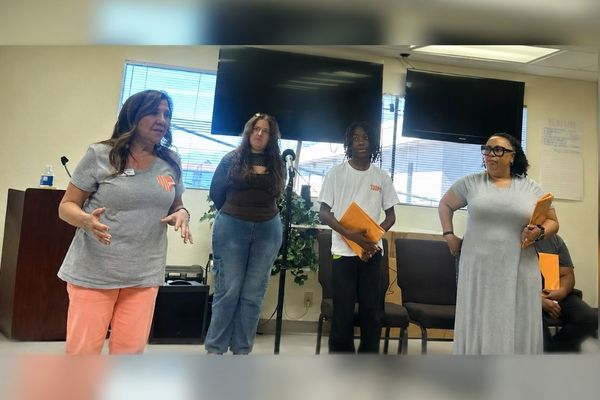
Prison gates close. They do not just shut in one individual. They close off a parent from a child, a caregiver from a family, and a person from their community. Incarceration is not a singular event, but a devastating, far-reaching phenomenon that touches every life intersecting with the system. Each of those voices carries a different experience. In Our Shoes reminds us that understanding someone’s story can change how we see them. Sometimes understanding is the first step towards compassion. Let’s hear a final note from our actors.
I did not understand what prison meant. I just wanted to see my dad. I was trying to be strong for everyone, even when I did not know what to expect myself. Sometimes the people in front of me are carrying more than I can see.
The rules are there for a reason, but respect and kindness still matter.
The rules are there for a reason, but respect and kindness still matter. Share on XAll I wanted was a chance to remind my sons that I still love them.
When incarceration happens, it does not affect just one person. It touches families, children, caregivers, and professionals whose lives intersect inside the prison system. Each of these voices carries a different experience. Each of them is walking their own path. In Our Shoes reminds us that understanding someone’s story can change how we see them. Sometimes, understanding is the first step towards compassion. At Prison Families Alliance, we work with children and families who are living with what we call the hidden sentence, the emotional and social consequences of incarceration carried by those on the outside.
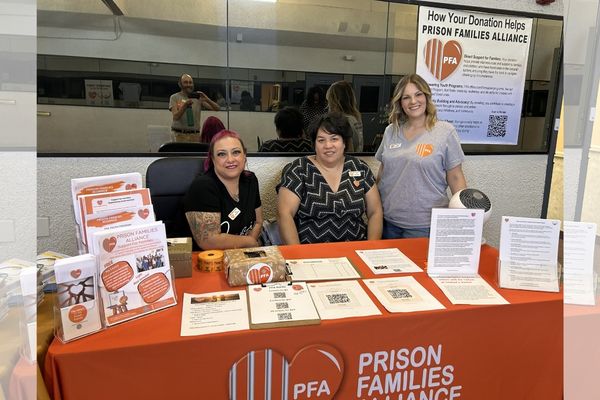
Through youth programs and adult support meetings, families find connection, information, and community. When people realize they are not alone, healing and resilience can begin. As you leave, I invite you to consider one question. If we truly step into each other’s shoes, how might that change the way we support children and families impacted by incarceration? Children and families affected by incarceration did not receive a sentence in court, yet they live with its consequences every day.
Children and families affected by incarceration did not receive a sentence in court, yet they live with its consequences every day. Share on XWhen we provide compassion, understanding, and support, we help lift the hidden sentence they carry. Thank you, Black Mountain Institute, for supporting this event. A special thank you to Connecting 4 Justice and Dr. Avon Hart-Johnson, who allowed us to adapt this presentation from the tale of two prisons, presented at the 2023 Connecting 4 Justice Conference.
Finally, thank you to the Prison Families Alliance for continuing to place emphasis on the importance of advocacy, self-determination, and the need for tools and resources to support our families and community. For more information on Prison Families Alliance, you can visit their website at PrisonFamiliesAlliance.org.
Important Links
- Prison: The Hidden Sentence™: WHAT TO DO WHEN YOUR LOVED ONE IS ARRESTED AND INCARCERATED
- Jamie’s Big Visit
- Doing Our Time on the Outside
- Connecting 4 Justiceon Facebook
- Prison Family Alliance
- Black Mountain Institute
- Prison The Hidden Sentence
- Connecting 4 Justice
Leave a Reply