
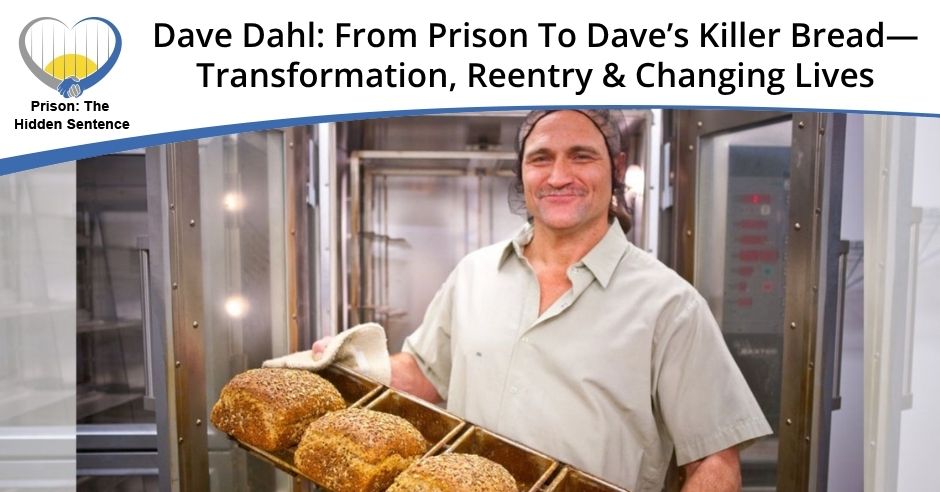
He spent 15 years in prison—then co-founded Dave’s Killer Bread and gave second chances to hundreds of formerly incarcerated people. In this episode of Prison: The Hidden Sentence, host Julia Lazareck talks with Dave Dahl about the rock-bottom moment that turned his life around, how he rebuilt his family relationships, and why second chances and successful reentry became his mission. A must-listen of hope and practical advice for returning citizens and families with incarcerated loved ones. Catch Dave as keynote speaker at the Connecting 4 Justice conference in San Antonio, September 30–October 2, 2026.
—
Listen to the podcast here
Dave Dahl: From Prison To Dave’s Killer Bread—Transformation, Reentry & Changing Lives
Welcome to the show where we raise awareness one story at a time. I’m your host, Julia Lazarich, advocate, author, and fellow traveler on this path. I’m the author of Prison: The Hidden Sentence™: WHAT TO DO WHEN YOUR LOVED ONE IS ARRESTED AND INCARCERATED, which can be purchased on Amazon. I’m here with Dave Dahl, who most of you know as the co-founder of Dave’s Killer Bread.
However, he’s also a father, a grandfather, and has great-granddaughters, which he feels very lucky and fortunate about, given how they turned out. He’s even working more on improving the relationship with his family. He’s currently focusing on writing a memoir that we’re all looking forward to reading and learning more about his journey.
—
Dave, thank you so much for being here today.
Thank you for having me, Julia.
It’s such a pleasure. As we discussed earlier, we’re going to talk about your relationship with your family while you were incarcerated and after your release. At a high level, how Dave’s Killer Bread was started, which I know you’ve spoken about a hundred times. We want to focus on your hiring practice, giving people who were formerly incarcerated a second chance at work. We’re going to talk about what you’re doing.
Reconnecting And Restoring Family Relationships After Incarceration
What I’m especially excited about is going to the Connecting 4 Justice conference later this month and having you as the keynote speaker. Maybe you’ll even give us a little insight into what you’re going to be talking about. Let’s get started. A lot of our audience members are family members and are always interested in ways families can stay connected, even in the most difficult times. Can you talk about your relationship with your family when you were incarcerated and then when you were released?
A good part of the time that I did was a total of about fifteen years. A good part of it was that I was too far away or not in the greatest relationship with my family. I didn’t get many visits; I did keep in touch with my mother. We didn’t have a close relationship ever. She was a loving mother. She was a very kind person. She always tried her best to help me.
I was always down about my disappointment, I guess, always getting in trouble. She was very happy when I started changing my life around. That was that relationship. I got a little closer to my brother and my daughter when I was in Ontario, which itself was 400 miles away from Portland. Portland is like home back there for my family. My brother got on an airplane during this time, and he started flying up to see me about once a year with my daughter.
I started writing letters with my daughter when she was about twelve. She started wanting my advice of all people. She wanted my advice on her little fairy relationships, her friendships, and things that she was going through. I was honored to be part of that after all these years of not being estranged. It was very helpful, very heartwarming for me, and gave me some more ability to love.
It’s so wonderful that you were able to establish that because, like you were telling me earlier, you pretty much, in the beginning, served your time alone and had your brother come out and bring your daughter and establish that relationship. Just for people tuning in, sometimes it takes time, but people do come around and then open your heart. That just sounds wonderful, and so you establish this relationship.
One thing I wanted to point out to other people that I’ve spoken to is that when somebody’s incarcerated, they can still be a parent to their child. Just like you were saying, your daughter came to you for advice. It’s something that can happen. We just want to make sure that, as much as we can to keep the family together. As you establish this relationship, you are getting closer to your daughter and your brother. When you were released, how did that relationship continue?
The last time, that’s the one that counts, because every other time I didn’t really reconnect with my family. The last time I got out was basically late, at the end of 2004. My daughter, by this time, was sixteen, and my brother had the bread company. I had an opportunity to go to work for Glenn, my brother, and that ended up being very successful.
That’s a family opportunity that most people do not have. I just happened to have a brother who my family had been in the bakery business with since my dad started in the 1950s. I had the opportunity to go to work with my brother. I tried to reestablish my relationship. Actually, I established my relationship with my daughter for the first time, but she was at that time really starting to hook up with boys, and it was tricky.
She ended up losing the place she was living in, and I managed to get a place to live, which was hard because of my felony status. She came to live with me when she needed a place to live. It was an opportunity for us to bond and to grow together. Because of all the boys that she was on the delinquents that she was hanging out with, it didn’t work out that well. It got us in trouble for a while. Eventually I’ll do that too.
You have great-granddaughters now. It seems like your family has grown. You were talking about your family being in this business for quite a while. As you said, not everybody has that opportunity. How did you start with Dave’s Killer Bread after coming out and working with your brother?
Second Chances And The Origins Of Dave’s Killer Bread
My brother said he’d seen me working on myself, perhaps in prison, learning and becoming humble and humble enough to learn and be a capable worker who was highly motivated. He gave me that chance, and it turned out to be a really good choice for him. Dave’s Killer Bread was an opportunity. It was like a brand within a brand. The family business was not a big business, not a big bakery. Dave’s Killer Bread was just intended to be a contribution to the family business. It was.
It made the rest of the business seem pointless. After a while, we just focused on Dave’s Killer Bread. It’s very successful with it, like, surprisingly, almost right away. It was crazy. It would have a life of its own. People often ask me about hiring and why I hired ex-fellas and stuff. It seemed like the natural thing to do because of what I had been through and how I’d seen myself. I experienced this change that made me a valuable commodity in the world. I felt like I could find other people who could do the same thing.

No, thanks for bringing that up because it’s really interesting. I started a blog in 2015, and one of the first things I blogged about was Dave’s Killer Bread and hiring people who had been formerly incarcerated. Now, eleven years later, I get to meet you and talk to you. That’s really cool. You really helped a lot of people who were formerly incarcerated work at Dave’s Killer Bread and your company and get new skills. You also do other things. Let’s just talk about your passion, and then we’ll talk about what you’re doing. What else are you doing to help people who were formerly incarcerated gather skills so that they can get into the world? We do know how difficult it is when somebody does have a record.
I’ve done a lot of things. I’ve been part of a lot of things where people are doing that because I get excited about people having opportunities to outgrow their bad past, because it happened to me. I love seeing it happen to other people. It just makes the world a better place in an exponential way because each person who goes from being a bad one to being a good one, I’m making it a very simple way of comparing things, being a bad seed and turning into a good seed.

It’s something that’s like a two-person swing. It was bad. You gained something good. To me, it becomes exponential because each person who makes that transformation influences their world by making, having a better family, being a better father, being a better mother, being a better employee, and being a better citizen. Each of those relationships creates more good relationships. To me, that’s an exponential opportunity for a person to change a person, or for this person to change. They can change so many things themselves.
Breaking The Cycle: Empowering Returning Citizens Through Trades
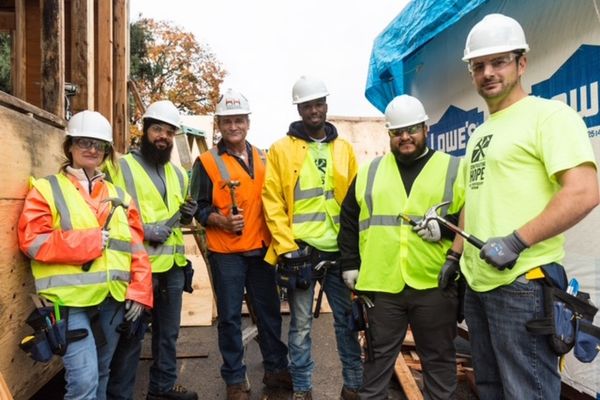
That’s become something I get involved in. I have an organization that I helped out. I’ve helped out a lot over the years. I helped him get through COVID. The name is Constructing Hope. I recommend looking up Constructing Hope because they’re a Portland organization that has helped many people learn a trade and get into apprenticeship programs that we need. The thing is that society and the market need a lot more people in the trades. Right now, that’s where the opportunities are.
Society and the market need a lot more people in the trades. Right now, that's where the opportunities are. Share on XI get excited about organizations that do that. They prepare people for these trades, and all of a sudden, they’re making good money. They’re supporting their families. This is a no-brainer to me, to get more people to learn the trades. That’s why I helped Construct Hope stay in business during COVID. Now they’re just going crazy. They’re just affecting so many lives. I recently visited Folsom. Before that, it was San Quentin present in California. Both of those organizations are operating the CALCTRA program. It’s just California training programs.
I’ve visited these places, and I see so many people’s lives being changed, and they’re working hard on themselves. In my case, I love seeing the drafting program they had at Folsom. I love seeing all the other trades that were going on, metalworking. They even have a Braille. They supply all the Braille literature for the country. It’s incredible what they do and that they get to be a part of something so great. While I do not have my own organization like this at this time, I’m a big supporter of other organizations that do these things.
You have a name, like people know who you are. You can do a lot for these organizations just as a speaker or a spokesperson. People getting the jobs that there’s organizations like that all over the United States. I just want to put out there to people that when their loved one is getting released, to look for these organizations, because there are a lot of them out there in certain areas.
I want to say it also, the opportunities in prison and its incumbent, I guess the word is, to folks when they’re doing time to take advantage of every opportunity that comes their way. Also, they can learn through books. They can learn through all these things to become a better candidate for a company or whatever when they get out, or to start their own business, whatever they do to work on it now. We can be considered outplaying cards, gambling, and whatever.
There are opportunities in prison, and it's incumbent on folks when they're doing time to take advantage of every opportunity that comes their way. Share on XWhen I was there the last few years, I focused on work on becoming a better person. I also exercised, and I was very serious about my exercise. I played my guitar. I did constructive things while I was there. Whatever opportunities there are are great. Also, I’d like to see more opportunities there. It’s not just “Look for this opportunity when you get out.” You should be thinking ahead. What are your opportunities, and how can I take advantage of those?
You’re absolutely right. The other organization that I’m involved with, Prison Families Alliance, says that reentry starts in the beginning, and that’s what we talk to our families about. Not only what you’re saying, people who are incarcerated need to take advantage of those opportunities, but we also encourage the families to talk to their loved ones to do that, to take the courses, to take the programs. It’s really important. As you talk to the family about doing that.
I really wanted to go back to what you were saying when you changed. Where you started working out, where you started reading, where you started taking advantage of the programs, because a lot of times it takes a while. Our families are worried about their loved ones because they’re not moving forward. Something changes, something clicks, and they start doing it. We tell our families to be patient because it happens when the person is ready. What was your catalyst to make that change?
Shifting Mindsets: Overcoming Depression And Rebuilding From Within
Best question. For me, I was suicidal. I thought there was no reason to carry on for a very long time. That’s a prison. I suffered quite a bit. I didn’t like it. I didn’t let on. I had to go out into the yard and tell people I was having these problems. I kept that to myself. Eventually, I had enough of thinking like that, feeling like that. I avoided doing it for a long time. Do you know what a kite is? A kite is an inmate communication form. I put in a kite to psychiatric services. For me, I used to think that I was miserable because life sucked.
Life circumstances are bad. Everything’s bad. Why would I not be depressed? I realized you could change your mind. It took me a while. I realized that I could do that, like, in baby steps. My first step was asking for help. I went to psych services, and they gave me medication. For me, the medication was helpful. It does not solve your problems. It gives you a tool to help you work on yourself. Your mind is not out there, constantly in a negative place.
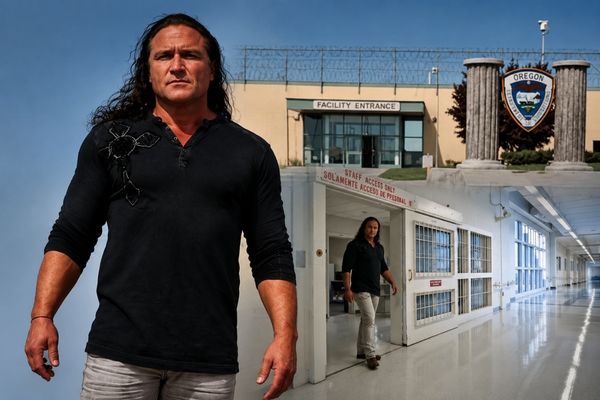
You are able to make choices that are more positive. That’s what, in my case, worked. It does not work for everybody. It might not have worked for me at a different time in my life. I was so desperate. I was at such a bottom point that I believe anything that had a chance of working was going to work for me at that point. It was the medication. I got an opportunity to go to school for computer-aided drafting. This all happened in a few months.
The medication and the drafting, and I was playing my guitar, working out. It all just happened. I have to say it’s hitting a certain bottom and going to go, “This life is not going to work for me anymore.” I have the ability to begin changing my life, and you can learn to enjoy living your life right there in prison. You can learn to enjoy the journey right where you’re at. That’s what I learned. You’re not waiting for the moment when everything’s going to be great. No, it’s great right now if you change what’s up here.

Thank you so much for sharing that. It’s so insightful. It really helps a lot of people. I know that was a lot for you to share. Thank you. That turning point brought you to where we are now. You made changes when you were incarcerated. You came out, you worked for your family business, and you created this brand out there. You now have a platform where you can help other people. Let’s get to where you are.
I want to talk about the conference that you’re going to be the keynote speaker at. I’m so excited about the Connecting 4 Justice Conference that’s going to be in San Antonio. People will be tuning in to this at different times. The conference is actually this month, September 30th to October 2nd, 2026. It’s for really everybody, meaning that it’s really everybody coming together, connecting family members who have a loved one who’s incarcerated, returning citizens, people who have been incarcerated by law enforcement, for educators, for people in the judicial system.
The only way we’re going to make changes is if we all come together and talk and learn from each other. It also creates empathy and compassion so that we understand each other, because it’s really important to humanize the whole process. Dave, you are going to kick us off at the conference. I was hoping you might share a little bit and give us a headline of what you’re going to be talking about.
I hope we talk about what I feel is the most important message out there right now for ex-fellows and for people, a lot of people, that they’re struggling for various reasons. There are opportunities out there, and we need more of these opportunities, and people need them. These opportunities are there. That’s what I’m saying. It’s like there are apprenticeship programs.
There are opportunities out there, and we need more of these opportunities than people need it. Share on XThere’s actual on-the-job training and skills that people can learn that are actually transformative. It’s like you’re making more money than you would make going out stealing. It’s a fantastic thing if you get to be changing the way you think. I’m going to be doing a monologue, not a monologue, a dialogue with Kayla. She will be asking me questions, and I’ll give the answers just like I am now.
That’s going to be a great opportunity to hear you and other people, and especially, like I was saying earlier, for family members to hear what their loved ones can do when they’re released and to have hope because that’s what you’re doing. You’re giving people hope. The whole thing is you have got to change your mindset first. It’s the person who’s incarcerated, the family on the outside. It’s changing that mindset and having that hope that there are opportunities out there.
Just like you, once you change your mindset, the opportunity shows up. That’s so important. Again, the Connecting 4 Justice conference, and go online to Connecting4Justice.org. Just so much, this has been such a great conversation. We still do have more time. What would you say to people out there? Let’s focus on the families and then the people who are released from prison. You’ve already said some things. What other words of advice, for everything you’ve been through, can you provide to the people who are tuning in?
Supporting Without Enabling: Setting Boundaries For Growth And Success
One really important thing. There’s a tendency, and I do not know. Every specific situation is different, every single one. I can say that one thing that I do not like to see is families enabling their loved ones in prison to continue their lifestyle. Do not somehow promote it. Do not make it too easy. If it’s easy in prison and you’re not making a change, that’s probably a bad thing. Probably not going to make a good result. You do not want to support the bad.
You want to support the good. How do you do that? It’s not easy to do that because you’re probably in the habit of saying, “Yes, Dad, life has been hard, and it’s just not your fault.” The thing is, it’s our fault when people are people. That’s the best way to look at it because then we get to change it. If it’s somebody else’s fault, then we’re always going to be victims. I’m absolutely against being a victim. The only way to do that is to take the bull by the horns yourself and change yourself, change your life.
Do you think that family members should talk to their incarcerated loved one to start? We talk about the Prison Families Alliance to start thinking about reentry. However, could the family put some requirements on the person who is incarcerated, that they expect the person to start thinking about and to be ready to use those new skills or a new way of thinking when they get out?
Yes, it’s like there are things that they could require, expectations that they expect to meet. They do not have to be meticulously hard things, but more like seeds of growth. As you’re growing, you want to set a person in the direction of growth as a person. That requires, like you said, a catalyst of some sort. The family can at least take that mindset, that general mindset that it’s going to take some shift in thinking of the individual, like perhaps the family, to actually go, “Look, this is not easy stuff.
You’re not a victim. I’m not a victim. None of us we’re not victims. Maybe we are, maybe we are victims,” that’s not the way to look at it. How are we going to get better? Coming into the relationship between family and the person in prison and such, you want a relationship of growth and change, and you do not change and grow without these steps. You can recognize the things that need to change in the mind of a person at the heart of a person. Each individual is different. If I were dealing with somebody right now who was in prison and I wanted them to change and I wanted them to grow.
You want a relationship of growth and change. You don't change and grow without these steps. Share on XI would keep in mind what kind of behaviors are causing them not to grow and not support those behaviors. Support new behaviors that are basically the opposite of those bad ones. Some of it just means, like, a person learning that they have some capabilities, that they have abilities. There are opportunities now. It could be books, could be things that you learn about that you can provide those people to read, and then expect to talk about them later.
That’s a really good idea of sending something and talk about it. A lot of times, our families do not know what to talk about or run out of things. They do not want to upset their loved one. A lot of times, their loved one is talking about situations that are happening while they’re incarcerated, and the family sometimes is trying to fix them. It’s changed the mindset for everybody. You just made some really good points. Thank you for your time. Can we leave them with a Dave Dahlism?
I didn’t create this, but one of my most important things is what I say. Learn to enjoy the journey, the fights, the downtimes, the struggles. All of them add up, and the successes, the little wins, they all add up to something. Each opportunity, each failure, is another stepping stone. That’s all it is. It’s another step. If it does not kill you, they say it makes you stronger. I tend to think that’s true. Enjoy the journey.

Thank you. I’m going to enjoy the journey. I’ve enjoyed the journey of meeting you and speaking with you. I look forward to seeing you at the Connecting 4 Justice Conference. Thank you so much.
You did a great job here. Thank you so much.
Important Links
- Dave Dahl on LinkedIn
- Dave’s Killer Bread
- Connecting 4 Justice
- Constructing Hope
- CALCTRA Program
- Prison: The Hidden Sentence™: WHAT TO DO WHEN YOUR LOVED ONE IS ARRESTED AND INCARCERATED
- CALCTRA podcast features Dave’s Killer Bread co‑founder Dave Dahl
- Prison Families Alliance
- Prison the Hidden Sentence
About Dave Dahl
 Dave Dahl is the creator and cofounder of Dave’s Killer Bread, the bestselling organic bread brand known for its whole grains, seeds, and bold branding. After spending more than 15 years in prison for drug-related offenses, Dahl returned to his family’s bakery in Portland, Oregon, where he helped transform a small local business into a nationally recognized company. His story of redemption, entrepreneurship, and second chances became central to the brand’s identity and has inspired millions.
Currently, Dave is writing a memoir, to be released in mid-2027.
Leave a Reply