
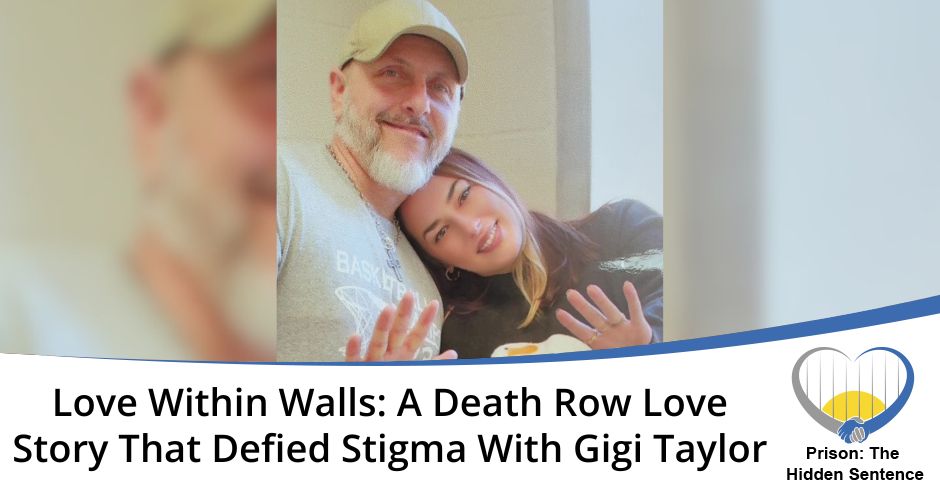
Prison, incarceration, and death row are often viewed through headlines—but what happens when love grows in a place most people never expect? In this powerful conversation, Gigi Taylor shares her unconventional love story with her husband, Michael, a man who has spent more than two decades incarcerated, including years on death row. Their relationship challenges the assumptions and stigma often attached to loving someone in prison and offers a deeper look at how connection, trust, and understanding can develop beyond prison walls.
Through her journey, Gigi brings humanity to a story many people may not understand, showing the world the person behind the label and reminding us that incarcerated individuals are more than their convictions. Listen to this episode for a thoughtful and eye-opening conversation about love, stigma, incarceration, and the human connections that can exist in the most unexpected places.
—
Listen to the podcast here
Love Within Walls: A Death Row Love Story That Defied Stigma With Gigi Taylor
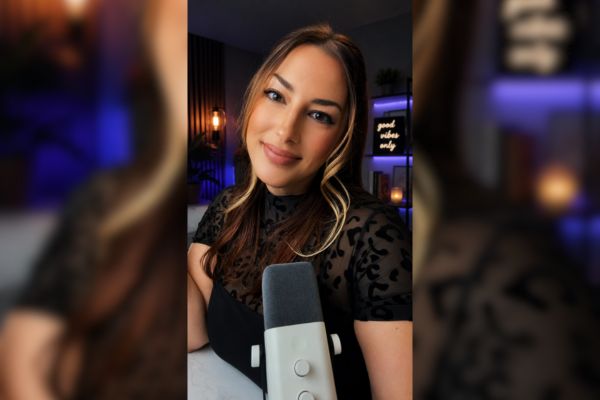
Everyone, welcome to the show where we raise awareness one story at a time. I’m your host, Julia Lazarich, advocate, author, and fellow traveler on this path. I’m the author of the Prison: The Hidden Sentence™: WHAT TO DO WHEN YOUR LOVED ONE IS ARRESTED AND INCARCERATED, and that can be purchased on Amazon. I’m here with Gigi Taylor, wife, advocate, teacher, and podcast host who’s going to share her journey of meeting her husband and learning about the criminal justice system. She’s very open about her story and provides insight into her relationship with an incarcerated man whom she married and their love story.
—
Gigi, thank you for being here.
Thank you for having me. It’s an honor.
From Curiosity To Connection: A Journey Begins
It’s so good to see you. We met several years ago at what is now the Connecting 4 Justice Conference, and I’ve watched your journey, and I’m so interested in hearing the full story. I do not think I’ve ever heard everything, and I know what you’ve gone through in all these years. Let’s start from the beginning of what you were doing before you met your husband, your thoughts about the prison system, or even if you thought about it before you met him. We’ll follow your journey to where you are today, the work that you’re doing, and the people that you’re helping. Let’s start from the beginning. That’s why I always like to start.
My story goes all the way back to, obviously, with my husband. It goes back to 2016. Before 2016, I was actually married to a man out here in the free world, and we were high school sweethearts. I thought about incarceration, but I never did a deep dive into it. I never gave it a lot of thought. I was moved, and I will say some movies changed my life because I love movies. When I was in high school, movies like The Green Mile and Dead Man Walking changed the way I thought about the death penalty. It wasn’t until the summer of 2016 that I became a teacher, so I’m a moth.
That’s usually my time to stream on Netflix and lie on the sofa and just binge-watch things. I found a documentary called Into the Abyss by the legendary Werner Herzog, and it was about a man on Texas’s death row. Obviously I went to find more things about death row, and I found Life on Death Row on National Geographic, also following several guys on Texas’s death row. It just made me think, hearing their stories and seeing, like, I’m a pretty empathetic person. I just thought, “What if it were me? What if I was in their shoes?” Some of the things that people were saying were pretty harsh.
I saw them as human beings. No matter what they did, obviously some of the things were very tragic and unspeakable, but I saw the humanness in them. I decided, “Maybe if it were me, I would want somebody to write to me.” I had never had any experience with the incarceration system. I didn’t pay attention to laws. I didn’t really care. I decided I was going to write to someone on death row in Texas, one of the guys on one of the shows on Life on Death Row. It hit me. I was scared. As I said, I’d never had any experience. I was like, I’m giving someone in prison on death row my address.
I started reading blogs on what to do when you’re first writing a pen pal in prison. I even asked my husband at the time. I said, “Do you mind if I write to someone in prison?” He’s like, “No, I know how you are. I know you have a good heart. That’s a Christian thing to do.” He was very understanding of it. I started looking in Texas, and I was like, “These guys probably get thousands of letters from people because they’re on national TV.” I said, “Why don’t I look closer to home?” I started looking on PrisonPenpals.com. It took me a while.
I was very slow in the process. I would say it took me about a month and a half, just because I was so scared. I did a lot of research, and I came across, I went through a lot of profiles, and nothing was really speaking to me. I was on PrisonPenpals.com, and I came across Michael’s penpal page. Something in my gut just stopped me and said, “Stop looking. Here he is, this is the person you’re going to write.” I was like, “I could write him.” I didn’t write to him at first. As I said, it took me a few weeks to actually put pen to paper, just because I was so nervous.
I had never done anything like this before. Finally one day, school started back up. It was the very beginning of August, and it was when the teachers went back the week before the students, and I came home one day, and I was just like, “I’m ready.” I just sat down after work at the dining room table and wrote a one and a half page letter to my husband, Michael, and I sent it off the next day. A few days later, I had a letter, and a day after that, I had a second letter come in. That’s where it all started.
I just wanted to clarify that Michael is your husband now, but he wasn’t at that time when you first wrote to him. Also, you’re such a good researcher. You spent the time and the heart, and also that you did share it with your husband at the time, so that there’s nothing hidden. Everything was out there. “I do this thing. It’s going to be a good thing.” I love that you’re humanizing people. A lot of people do not take the time to watch those documentaries or those movies. The Green Mile really got my heart too. That was the one that I saw. Just humanizing people. As we say, it’s what they did, not who they are. There’s a lot of good people everywhere. I just wanted to bring that out. Getting back, you wrote him a letter, and then he wrote you back?
Yes. Can I just go back for a second?
Of course.
It’s because I wanted people to know I am a human being, and I dig. I do a lot of digging before I jump into something. A lot of people are like, “Did you actually Google his crime and all that?” I would say yes, I spent an extensive amount of time looking at his appeals, looking at the facts of his case, looking at court documents that were posted in the public domain online. I did spend a lot of time. Once I figured I was going to write Michael, I think that’s why it took me so long, because I wanted to research him, understand his case, all of it. I wanted to know before I walked in. Just going back, I forgot to mention that. I just wanted to add.
Your intention really, with your big heart, just like, “Here’s somebody out here who’s a human being. I just want to let them know that there are people out here that understand that he’s a human being and he deserves to have that connection with people on the outside.”
Building Bridges Behind Bars: Why Writing Matters
I wrote to him as a friend. As I said, I was already married at the time. I wasn’t looking for a relationship. What got me to pick him was basically what he said in his profile. It was very different from anybody else’s what they were saying. He just seemed very genuine. He talked about just wanting to connect with people. He wasn’t looking for anything. The way he wrote, it almost felt like I knew him already. That’s why I chose him. Going back to what you were saying, I wrote him a letter on August 4th, and I got a letter from him. He got it on August 8th, and he wrote me back, and I didn’t get it till like the 10th or the 11th. A second letter came the day after. He wrote two letters after receiving my one. He was very excited to receive my letters.
Now you’ve got this pen pal, and you’re writing letters back and forth, and you’re still married at this time. How did the friendship grow with Michael?
The friendship didn’t grow right away because even though I felt like I knew Michael through talking to him, I felt like, just through letters, I felt like I’d known him my whole life. My husband and I, one day we were just sitting on the couch, I think we were getting ready to watch, it was like the end of August, we were getting ready to watch a 9/11 docu-series on the History Channel, and we were doing laundry, and out of the blue, my husband at the time said, “What do you think if we’re not married anymore?” Granted, we’d been together a total of seventeen years.
We were married for nine, we grew up together. It crushed me, and I could tell he was pulling away. We decided to separate at that point. He left the next day, and we tried to work things out, but it didn’t work out. We ended up separating. That is where Michael and I were in between. In that fall of 2016, Michael and I grew because we started talking a little more flirty, because I felt a sense of being free. I mean, we were separated. I was married, but we weren’t living together. There were points in going through my separation where I didn’t think I could make it.
I didn’t think I could survive it. Michael was there for me. I call him my angel. He helped me through a really difficult time because that relationship was all I knew. I think through that we bonded. We went from being friends to being best friends to him sending me one day getting flirty and then him sending me one day a little middle school piece of paper that says, “Would you be my girlfriend? Check yes or no.” Obviously I checked yes and sent it back. I was hesitant because I had no idea what kind of relationship this would be.
You’re with a guy on death row, but the way he made me feel, I felt something I had never felt before in the seventeen years of my marriage and my relationship with my ex-husband. I jumped in very naively, I will say that. It felt like the right thing, and I felt like I had found someone that was the counterpoint to my soul at that point. I felt very strongly towards Michael, and we got to the point where we were together. Prison relationships, for those of you who aren’t in one, move very fast because there are no distractions. You do not have things out here distracting you.
It’s very much a solid connection and emotional connection. It progresses very quickly. By October, Michael was telling me he loved me. The first time he told me he loved me, I just said I wasn’t ready. I wasn’t ready for that. Emotionally, I wasn’t ready at the moment. He told me, “You do not have to say it back. I just feel this way, and I want to tell you, and I want to be honest about my feelings towards you, and I love you. I want to say that to you.”
I just said, “Thank you,” because I wasn’t ready. Now it took me about 24 hours. After that, I was like, “I love you too.” I told him the next day. We moved very fast in our relationship. At the same time, it felt natural. It felt like I’d known him for years. It felt like not only did I have a man that loved me, I had a best friend. That’s where we always say, we still say it to this day, “You’re my best friend.” I think that was a bond that I had never had before.
The Double Life: Navigating Love And Social Stigma
While you’re going through this, first of all, I want to say to other people that I’ve interviewed who have loved ones that are incarcerated or have been released that that relationship with somebody that’s incarcerated is so strong because, as you said, there are no distractions and they feel closer to that person. You explained that really well. As you were going through this point where you’re communicating with him, you were going through the divorce. First of all, did you have any other support while you were going through the divorce? Second, did you have support or talk to anybody about this relationship that was forming or the emails or communication that you had with Michael?
The support that I had, I had told one person in September when he asked me to be his girlfriend, and I told them that I was talking to him and that we were feeling each other. She was a little hesitant, but supportive. Obviously, when you tell someone, “I’m talking to this guy, and he’s at Angola, and he’s on death row,” people are going to be like, “Oh.” That’s their initial reaction. She was very supportive, and she’s like, “Look, it’s not who I would pick for you, but if you’re happy, I support you.” I didn’t tell a lot of people at first.
I will say, for a long time, I was in the closet about my relationship with Michael. A lot of people didn’t know. A lot of people just thought I was talking to somebody, but didn’t know who he was. I just didn’t talk about Michael very much. I kept that part of my life in the closet. When I did tell people, I just said, “He’s just a pen pal.” I even had one of my best friends tell me, “This isn’t healthy. If you fall in love with him, it’s not healthy.” I just decided not to tell people. It’s funny that my best friend who told me that found out about Michael probably about five years after he and I were together.
She was devastated, and it wasn’t because she was upset about Michael. It was that I didn’t tell her. She felt hurt that I didn’t tell her. I said, “You told me that it wasn’t healthy. You’re very conservative, and I just didn’t want to come out and tell you because I didn’t want you to judge me.” There was a lot of judgment, obviously, and I was nervous about that. I kept it to myself. As I said, I only told one person in the beginning, and going through my divorce.
I do not think my ex-husband even knew that it went from being a friendship to more. I didn’t tell him about it. Michael was there with me throughout. It was six months here in Louisiana for the divorce. We were finally divorced in January. It was hard to navigate. Being this one person with Michael, but then I had to be a different person out here. It was actually exhausting for a long time. That’s how I lived. There was a lot of worry about judgment.
I just wanted to say, what you’re going through. A lot of us who have an incarcerated person, whether there’s a relationship or not, it’s a family member that we do not talk about. It’s not unusual because people judge, and unless you’ve been through it or understand it, you do not even have to understand it, but accept it and have compassion and know that that’s somebody’s choice and that we do have that choice. I totally understand not telling people.
If that's where your heart is, then you do what's best for you. You stay true to yourself. Share on XWhen you do tell them, a lot of times they’re like, “Why didn’t you tell me?” and because, like what your friend said, I think that was really eye-opening to people that are tuning in. When somebody is going through something, whether they’re having a relationship with somebody that’s incarcerated or has a family member, to be compassionate and to just support your friend, your loved one. Thank you for sharing that. It sounds like a really crazy time, for lack of a better word, like you’re going through a divorce and then you’re starting this relationship, and it’s not what I’m looking for, something that people would expect, or that they know of. You’re really opening people’s eyes to like “Love is love.”
A lot of people thought, especially the very few people that I did tell, I think they thought, “This is just a phase.” My parents were very supportive of my divorce. They supported me throughout my divorce. They didn’t know about Michael probably until about 7 or 8 months later from when I first started writing Michael. I think they knew that I was writing to someone in prison. When my mom came to my house, my parents came and checked on my dogs while I was at work. She saw my letters, and they had little hearts on them, and she didn’t like that.
When my mom saw that things were turning, she started taking my mail. She didn’t speak to me. I talk about this all the time. My mom and I are very close. We’re best friends. I do stuff every day. I talk to her every day. I do things with her all the time. For her not to talk to me for two weeks, it was a big deal. My dad’s a very reasonable man, a very smart man. He said, “She’s an adult.” I was 33 years old at the time.
“You cannot take her mail. You need to return that. That’s a federal offense.” I got my mail back. With my mail, she wrote me a letter and basically said, “You’re with a murderer. How can you do this? What would your family think? What would your grandmother be rolling over in her grave?” All of the slew of judgment that comes with it. My parents thought that this was also just a phase for me, like, “She’s going through a divorce. She’s hurting, so she needs a little emotional support, and this is where she’s getting it.”
I do not think they thought that I would still be here ten years later doing this with Michael. There was a lot of anger, resentment, and judgment from my own family. Basically, my mom told me, “You cannot tell your brothers ever. You cannot tell anybody at work ever because you’re going to lose your job. You’re going to lose everything,” which I understand. They were being protective of me. That is why I stayed in the closet for so long too.
That makes a lot of sense. You said it took what, like seven years for your mom to come around. What is your relationship with her now?
Breaking The Silence: Finding Acceptance At Home
My relationship with my mother never changed for a long time. I just never talked about Michael. Just don’t ask, don’t tell thing. We do not talk about him when we’re together, which I respected. She is my mom. I love her. She’s my first best friend. We were driving home. We went on a trip together, which we do. We do a lot of things together, from Natchez, Mississippi, and it’s about an hour and a half drive, or maybe a two-hour drive from New Orleans. We were passing by the road that goes to the prison. I said, “I’m so close. That’s the road that I take to go see Michael.”
I told her that. She said, “I’ve prayed a lot about this situation, and I prayed for understanding.” I said, “Mom, I need you to know, I’m getting emotional. He’s the love of my life. I’ve waited for a man like him all my life.” She’s like, “I see that. I do not think you would be doing this for seven years.” We were seven years at that point. “You would be here doing this seven years later if I didn’t think that you saw something in him.” She’s like, “I just continue to pray for understanding, and I love you.” It was a breakthrough moment, and it allowed me to feel like I didn’t have to hide in shame anymore. I can talk to her about Michael. I can talk about things that make me happy with Michael.
I do not have to sit here and hide it anymore. That was the moment for me that really changed everything. Having that understanding from the person that I love the most meant everything to me. I do not care if people on the street say horrible, rude things, which they do. To have her acceptance of it was what obviously pivoted me to be more outspoken, to speak out, to make the podcast, to do these things. I do not think I would have done that if I didn’t have that acceptance from my mother. Even some people at the conference were asking me like, “I resonated with that because my mom doesn’t want to talk about my loved one.”
If they start seeing the human and not just the crime or the criminal, then they're more likely to be more accepting of it. Share on XI said, “You have to learn. In this day and age, we are so used to getting everything immediately, and we have very little patience.” I always say, “If that’s where your heart is, then you do what’s best for you. You stay true to yourself.” People will eventually come around, and you have to give them grace, and you have to be patient with them. I looked at it both ways. I said, “My mom’s looking at this like my daughter, who is a successful woman and that I’ve raised to be an independent, successful woman, is with a guy on death row.”
If that was my daughter, I would maybe have the same reaction too. You have to look at it from their perspective. It’s not someone that they would pick for you, and they’re going to make sure you’re not doing this just to do something wild and crazy and rebellious, and they’re trying to protect you. My mom always walked from a place of love, even though sometimes her words were harsh, even though sometimes her actions were harsh.
It was always from a place of love, and you have to understand that. Just doing you and saying, “This is what I want,” at the end of the day, and seeing them see me dedicated to Michael really changed their perspective. It changed my father so much. I’m going to get emotional again because my father is a very conservative man. He’s always been that way, and he was very much for the death penalty. In fact, when I first started writing Michael before he even knew about Michael, we would have conversations about politics and the death penalty. He would say, “They should execute him within a year and a half of their sentence. Get it done. Stop wasting time in court.”
That was my dad’s stance back in 2016, 2017. It wasn’t until Michael went up for clemency in 2023 and my dad was like, “He just wants a life sentence. I do not see what’s so wrong about that.” I made Michael human to my parents. It was such a big moment for my dad too. My dad was in support of Michael getting clemency when at first he probably thought this dude needs to be executed. To have that moment as well with my dad, and my mom was like, “Your dad is in support of Michael getting clemency. He wants to see him have a life.”
Just know that over time, no matter where your parents are with your relationship or supporting a loved one that’s incarcerated, if it’s another family member, just know that in time. If their heart is truly pure, they will come around. They will start to understand, and it’s your job to make them human, and that’s all you can do. If they start seeing the human and not just the crime or the criminal, then they’re more likely to be more accepting of it. We also have to give them grace and time to be able to do that too.
Thank you for sharing. You just humanized Michael to the world, not only to your parents, and it’s true. We do not know what we do not know. When we talk to people, when we hear people’s stories, when we know people are coming from their heart, we can see people as people, and that’s so important. That’s why we do what we do. I want to talk about what you’re doing now, but I want to continue your journey of marrying Michael.
When did that happen? How did that happen? Who was there? To people that are tuning in because you found this person that, I do not want to use the word soulmate, but this person that was really dear to you in your heart and you knew it from the beginning. I know, like, when I first met my husband, I knew the next day. You just know when you know. How did the proposal and marriage, how did all that work?
Commitment Behind Glass: Our Unconventional Wedding
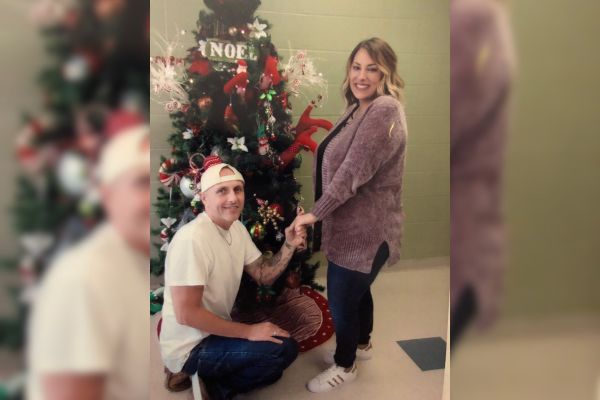
We got engaged around Christmas of 2018. Michael got down on one knee in the visitation room. His parents were there. His best friend was there. He asked me to marry him and spend the rest of my life with him. I said yes. We have a picture of us, him on his knee with the ring and everything. It wasn’t until May of 2019 that Michael and I had our own marriage, where we had a commitment ceremony where we exchanged our own vows. I got a ring for him, and we ate cake and had a visit and just spent the whole afternoon together. That was obviously about six months later. We’ve been together since we met and committed. I like to say I have been committed since May of 2019, on my birthday, actually. It was a wonderful birthday present to be able to do that.
Tell me, I just want to tell you a really quick story. The first time we went to visit my brother, it was on Valentine’s Day, and there was a wedding. Us being so new to the whole system. You do not know what you do not know. Like, “Why would people get married in prison?” It was just so mind-blowing for us. I wanted to share that because now I know that you talk about love is love is love. People can make a commitment. Outside looking in, it’s so hard to understand. I’ll just never forget that first day. I saw that and everything I’ve learned since then. That was more than twenty years ago. You learned a lot.
I will say this. Prison and learning, walking into my first visit.
When did you first visit him? That was my other question.
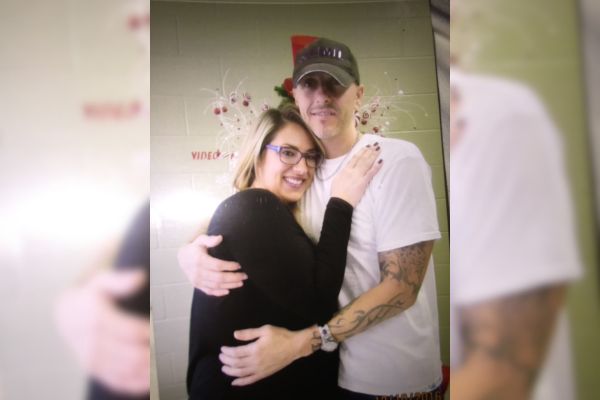
I first visited Michael one of the last weekends after Thanksgiving in November of 2016. We had a glass visit. It wasn’t like a regular visit. It was behind glass. That first glass visit solidified my relationship with him. It made me realize, like, “This is my person.” You have the idea in your head, but seeing him in front of you and standing there, we realized we are each other’s person, and this is the person I want to be with, and I love this person.
We started visiting at that point, and we had our first contact visit, which is what people would normally think of as a regular visit where you go into a room and you’re sitting at a table with them. It was in December, and we had our first official kiss in December of 2016. It was weird because technically I was still married to my ex-husband. We were separated, but in going through the divorce, we had already filed the paperwork. It was weird kissing another man because I hadn’t kissed another man in decades. It was very interesting, but it was amazing because I got to meet his family.
We were all there for a Christmas visit, and it changed my whole life. I will say, like prison does really open your eyes. It opens your heart, and here we are. We are ten years later, still here, being together and being married. It’s been a journey. I will say it’s not always been easy. There are days when I doubt if I can still do this. The prison system can be really hard, and we do not have a lot compared to people in population. At the end of the day, this is who I want. No matter how hard it gets at the end of the day, this is where I want to be, and this is who I want to be with.
By taking the time to educate, you are humanizing your loved one who is inside. Share on XIt’s nice that at least you get to see him. Imagine that. Everybody can remember their first kiss with that special person.
His mom was in the background. They’re from North Louisiana, so they have like a little bit of a country accent, and she was like, “Give him some sugar down, give him some.” I had his mom cheering us on in the background. I’m like, “Oh gosh.”
I love those accents, like, “This is going to be sweet.” I love that. You talked about the clemency hearing. However, he’s still incarcerated.
In 2022 going into 2023, the governor was very supportive of not using the death penalty. The goal was to clear out the death row. You had to meet a certain set of criteria to go up for clemency. We worked really hard. His lawyers were working really hard on getting about 50-something of the guys, or maybe 40 to 50 of the guys on death row, the opportunity to have a clemency hearing. Unfortunately, it was sabotaged by the attorney general, who is now our governor. They made it basically so that nobody could get clemency. They were given the hearing, but nobody got clemency.
It was a rigged system. Michael went up to get a life sentence, basically, going from death row to being in population and getting a life sentence. He and about twenty of the guys that went up to actually have hearings. Nobody got it. He’s still on death row. That was a huge blow to me. Before what happened recently, that was probably one of my lowest points in our relationship, just because I was at a low point.
I felt defeated because I had so much hope. We’re not asking for a get out of jail free card. We’re asking just for a life sentence, like LWOP, life without parole. When we didn’t get that, it was a really devastating time for me emotionally. I pulled away, and I had to deal with my feelings on my own. Michael was there to support me, and obviously he was devastated too. We were there to support each other, but that was a low point for me.
It’s so hard with our families. Especially at Prison Families Alliance, we say that there’s always hope, there’s always hope, and there’s still hope.
Hope, Heartbreak, And The Quest For Clemency
You do not even want to know what I was saying at that point. I said, “Hope is just a woman’s name.” That was my line. I was so bitter and upset.
It’s hard when you’re going through it. It is. You never know what tomorrow’s going to hold. I just wanted to bring out because you did say that it was a murder charge, and our grace and our thoughts still go out to the victims. I just want to say that because a lot of times people come back and we get comments and they’re like, “Because of what he did, he deserves this.” What we’re saying is that our hearts still go out to the victims. We’re focusing on the person that he is now. I’m trying to bring that.
I always try to go visit the site where it happened and leave flowers. I felt really bad about being with Michael at some point in my relationship. It led to my own demise. I started going down paths I shouldn’t have, substance abuse, things like that, because I did feel tremendously guilty for being with someone who took someone else’s life. I love that you said that. I never want to take away from what happened and the impact that Michael’s decision that day had on a family and the community. At the same time, I will say he had just turned twenty years old.
He was 45 when he went up for clemency, and he changed his life. He wasn’t the same twenty-year-old when that tragic day happened. That’s why I was such a big advocate for him getting clemency, because I know what a good person he is. To some people, he’s never going to be a good person. I understand that, and people are valid in that, but to me, he is a beautiful person, and he’s done a lot while incarcerated. He’s gotten his GED. I’ve helped him with that. He’s gotten into programs. He was baptized.
He was in very religious programming. He wants to be a better person. He wants to do whatever he can in there to atone, to try to make it right with what he can do. He’s never going to go back in the past and change that, as much as we both would love that, to be able to take that hurt away from the family. We just wanted him to have a chance at getting a life sentence. That’s it. Not getting out of prison, just getting a life sentence to be able to live the rest of his life at Angola.
We’ll keep posted on that. Thank you for sharing that. I know that’s really hard. Where you are today, you’ve been through a lot, and now you’re doing a lot. I know that if Michael came out, a lot of returning citizens give back when they get out because they are a changed person, and he’s doing what he can while he’s incarcerated, and people do not realize how much people really can do while they’re incarcerated to help other people, especially older people that are incarcerated, help younger people. That does help with recidivism.
I’ve interviewed some people who have come out, and because of the support they’ve gotten from older people have helped them when they got out. I’m glad to hear that he’s not only changed, but he’s helping others. You are doing a lot now. Let’s bring things forward. How did you get involved? Was it after you had those conversations with your mom and your dad? I know for myself, when my brother was incarcerated, I didn’t talk about it. At a certain point, I did. What was that turning point? How did that bring you to what you’re doing today?
The starting point was obviously my mom being more accepting, but the point that got me to where I’ve been a little bit more coming out of the closet and being more open and talking about it was when Michael got denied clemency. I was at a very low point. My co-host Paige, her and I were in the same prison wife circles on Facebook. We knew of each other. We talked here and there, but we weren’t close or anything. She actually reached out to me and said, “I’m here for you if you need anything. I’m here if you need to just vent and talk about it.
I cannot imagine what you’re going through.” She was very validating, very empathetic. She let me just bare my soul about how I was feeling in that moment, which was in a very dark place. She’s like, “I want to start a support group. You’re the reason why I want to start a support group. There are reasons like this, where people feel like they’re alone, nobody understands what they’re going through.” I said, “I’m an admin in another nonprofit support group, but I do not mind helping you get this started or whatever.” We started Love Within Walls, which is our incarceration support group on Facebook. That was in November.
The clemency hearing was November 8th. It was the end of November that we actually started, right after Thanksgiving. We started Love Within Walls in 2023. A few months after that, we had been talking back and forth. Paige and I grew closer as friends through that. We started talking about, “We should do a podcast. There are no prison wife podcasts out here.” One day in February, she’s like, “Look what I made. I made a little banner just to see what it would look like.” We’re like, boom, let’s go. We started ordering equipment, got software. We got everything ready, and we started working on Love Within Walls: A Prison Wife Podcast. That finally came out a few weeks later. February 21st of 2024 was our first episode.
Ever since then, we were both hesitant because Paige and I were both in the closet at that point. We said, “If we’re going to do this, we’re going all out. We’re going to be putting ourselves out there, and there’s going to be judgment, and there’s going to be haters, and there’s going to be maybe repercussions of people finding out that we’re with a loved one that’s incarcerated.” We just said, “We’ll do one toe at a time coming out of the closet if we have to.” That’s what we did. Those two things pivoted me into making a space for others. Also making a voice for others to feel seen and heard, having a loved one that’s incarcerated.
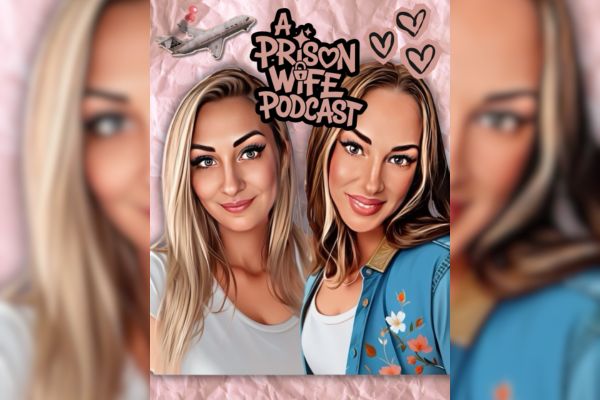
I just want to do a little plug here for prison wives, for people that have spouses or partners, the Love Within Walls Facebook group and the activities that they do, getting people together sometimes on a Friday. What do you guys call that?
Building Community: The Power Of ‘Love Within Walls’
We have all kinds of stuff. We just finished Life for a Wife Week, which is a week to honor those men and women who are supporting or loving their partner who has a twenty-plus sentence or life sentence or death row sentence, just to give them a week to honor them. We always talk about everybody going down the river, but we all might have different boats. You may have a boat that might pull off to the side, and you get off five years down the road, whereas my boat’s still going to be going down the river for the rest of my life.
It’s a week to honor those men and women who are supporting long term. We had a girls’ night in, which is what we call for Life for Wives last night, which was great. We got to just hang out and talk and share ideas, share issues that we faced with visitation and all the things that we have to deal with having a loved one inside. We also have craft nights. We have just hung out, painted, and sip nights on Zoom or Google Meet where we just get together from all around the country.
You have women just coming to have a conversation. We try to do engaging activities, and we also try to do meetings and meetups to meet people outside of just the group. We’ll have annual meetups where we’ll go to a city, and people will come join us if they live nearby or if they just want to travel. We’ll hang out and just have a girls trip, that kind of thing. We try to do a lot of different things in the group to support women and men who have loved ones that are incarcerated.
There is support out there. I love all the things that you’re doing. That’s why we’re doing this show, not only to tell your story, but to let people know that there is support out there. There’s Love Within Walls on Facebook, and also Prison Families Alliance has the Long Sentences group. So there is a lot of support out there, and Gigi, Paige, and Prison Families Alliance, we support each other. We just want to make sure that everybody has a place to go, a safe place, a compassionate place with people that understand. If you know anybody who is affected or if you are yourself, there is support, there is hope, and there is compassion in these groups.
I wanted to put that out there as well as the show, which has a lot of good information. Love Within Walls. Gigi and Paige have such big hearts. I just wanted to share all that. We’ll have all of that information free for any of our audiences. I wanted to wrap things up a little by talking about judgment because I think that’s something that a lot of people experience. Also, for people that are tuning in, how they can be more compassionate. We spoke earlier about how you handle judgment in the beginning and what you’ve learned and how you handle it now. If you could share that with our audience.
I’m one of those people who used to really care about what people thought about me. That’s why I kept Michael hidden for so long. I was just worried about the judgment, and I was worried about what people would think. I worried about whether people would see me differently. I kept things on the DL, on the down low. Now when I do interviews and people have all kinds of comments, believe me, “You’re a mental case, you need help, and what’s wrong with you? Are you thinking about the victims?” I get it all. Now it’s just like, I’m not stopping doing what I’m doing and loving who I’m loving because you have an issue with it. I try not to let it get to me.
As I find, as I’ve gone through this and come out of the closet, I’ve learned to get a little bit thicker skin. When I first came out of the closet, people were judging me and saying really horrible things. It hurt me, and I let it get to me. At some point, you get to the point where it’s just like, you hear it so much. You’re just like, I’m never going to change your mind. You clearly do not want to be educated. If you want to say ignorant things, that’s only going to make you look weird, bad, whatever. A negative thing. I do not let it bother me anymore. I was more worried about the people that I care about.
People on the internet, I’m never going to talk to them. It’s like, what’s the point in investing my energy into that? People that I love, my family, my friends, people started finding out about the podcast and about Michael and our story because I was coming out more and more and sharing more and putting pictures up and not caring what people thought. For the most part, I will say this. I get more judgment from people that I do not know, people on the internet, internet trolls. That’s where I get a lot of judgment.
My brother that I am very close with now knows, and he found out about the podcast. I didn’t tell him. He came and hugged me and said, “I love you regardless.” I came out to some of my high school friends. I came out to my best friend about the podcast and about Michael. Some people are a little bit, “Okay.” They’re a little hesitant at first. For the most part, people have come to me and have said, “I’m just proud of you for using your voice, and you do not have to feel ashamed with me.”
That is just such a beautiful feeling because when you’re living for so long in this closet of shame for your people that you’re closest to, to come to you and say, “I’m here, I do not judge you, I’m happy for you. If you’re happy, then I’m happy for you, and I love you.” I’m still me. The person you knew before knowing about Michael is still here. I haven’t changed. People see that. For me, it’s been a very freeing and wonderful experience coming out. As I said, the people that do not know you are going to say what people do not understand. They’re probably going to say some ignorant things.
Finding Your Voice: Advocacy And Leading With Love
That does not bother me. It’s the people that I care about and that I see on a regular basis and that I love that matter to me. People are excited for me that I have a podcast. People are excited that I’m happy and that I’ve found this life, and I’m advocating and doing things that are positive, and putting forth energy into something good. That’s been very freeing for me. That’s even pushed me to do more and to speak out more and to use my voice more for sure.
That’s so helpful. This has been a journey, and I’ve seen part of your journey to where you are, and you’re so beautiful, and you speak really well, and you really have a voice, and it really helps people understand. I think through Love Within Walls, through Prison Families Alliance, through the Connecting for Justice conference, we have all these platforms and environments where people can come and talk and get support. The more that we raise awareness, the more that we talk about it, the more that people understand. That’s how change will come.
We know when we talk to our families in our meetings, some people are getting these really long, harsh sentences. We’re not saying that people should not have to. Everybody has their own opinion, but we’re not saying people shouldn’t go to prison. I know there are abolitionists that are tuning in. However, there is retribution. There are ways that people do change, that, as we said earlier, they’re not the person they were when they committed whatever it was. The families should not be stigmatized because of that. We need to have an understanding. We need to support each other.
We need to love each other. I just appreciate you so much for what you’re doing and your voice. If people want to see pictures, they can go to PrisonTheHiddenSentence.com on the show, and we’ll have pictures. Any last words for our families, for people that are tuning in, people that have somebody that’s incarcerated, somebody that has a pen pal, somebody that has somebody that they’re having a relationship with that is just as impacted, or our students that are listening or professionals that are listening, or just people that are curious because they want to understand more.
Everything that you do, you should lead in with love. I always say that, and at the end of the day, we’re all humans. This is a human experience. Unfortunately, there are choices some people make that have very detrimental consequences. The whole point of the hidden sentence is the fact that we’re doing this time with our loved ones. People need to understand that it’s hard. It’s hard on the families and the spouses out here who are navigating both worlds, the world of being incarcerated and the world outside.
Just to, I say, for the people who have a loved one that’s incarcerated, lead with love wherever you go, whatever you do. That’s the best approach to life in general. People are going to judge, but it’s all about also when people judge, it’s very important that you take that moment and you make it a teachable, loving moment and you educate, because people are going to say, “You should seek help because you have a husband who’s on death row and you chose that.” Yes, I did choose it, but this is the healthiest relationship I’ve ever had.
I wouldn’t be doing this for the amount of time that I’ve done this and dedicated myself to this cause if I didn’t think that this was something that was terrible for me. Leading with love and taking the time to love and educate people on the stigma, the judgment, and the things that we have to go through, the traumas that we have to experience here on the outside just to get in to see our loved ones. Through love and education, we can slowly change people’s perspective. One in four women has a loved one who’s incarcerated, a family member or a spouse that is incarcerated in this country.
One in four of the women you see on the street knows someone who’s in prison, and that somebody means something to them. There’s more of us than you think. Please know that. Just taking the time to break the stigma by educating others and leading with love are the two things that I think are the best things to do when facing judgment from others or curiosity from others. We do live in a world where true crime is like the big thing, and people want to know about the crime, but they do not care about the humanness part. By taking the time to educate, you are humanizing your loved one who is inside.
Well said. Lead with love. Thank you, Gigi.
You’re welcome. Thank you for having me.
Important Links
- Gigi Taylor on Instagram
- Love Within Walls on Facebook
- Love Within Walls: A Prison Wife Podcast on Apple Podcasts
- Prison Wife Podcast on Linktr.ee
- PrisonPenpals
- Prison: The Hidden Sentence
- Prison Families Alliance
- Prison: The Hidden Sentence™: WHAT TO DO WHEN YOUR LOVED ONE IS ARRESTED AND INCARCERATED
- Connecting 4 Justice
About Gigi Taylor

Gigi Taylor is a wife, advocate, teacher, dog mom, co-founder of Love Within Walls Support Group, and co-host of Love Within Walls, a Prison Wife Podcast. She has been in the criminal justice reform realm for 10 years, after meeting her now husband, Michael, who has a death sentence in Louisiana. She understands the struggles many loved ones face while dealing with incarceration, and she uses her voice on the podcast for the voiceless. Gigi challenges the stigma many prison wives and families dealing with incarceration face, and she is determined to break it. She brings knowledge of nonprofits from her previous experience working with organizations and groups that focus on prison wives and families.
Leave a Reply