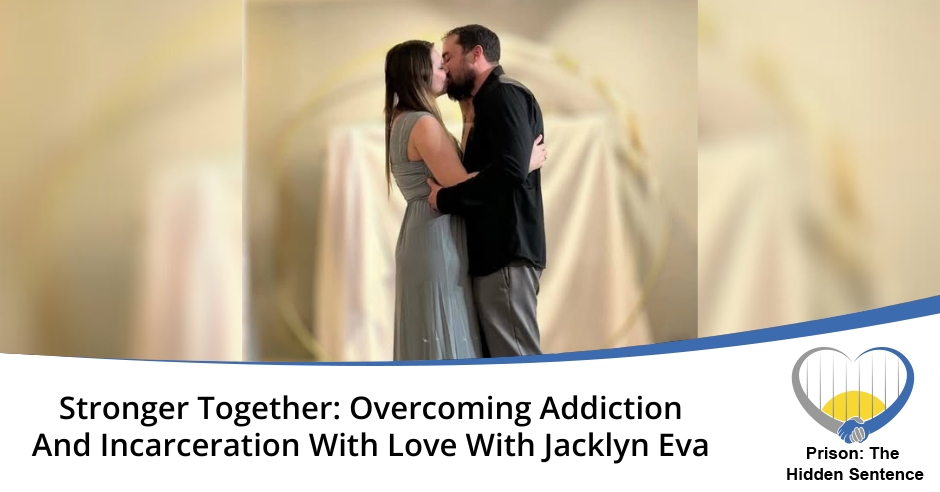
Incarceration and addiction can tear families apart, but today’s episode is a testament to the power of love, resilience, and second chances. Jacklyn Eva shares her deeply moving journey of navigating her husband’s incarceration and their shared battle with addiction, revealing how they’ve maintained their connection and built a foundation of healing and purpose. This episode is a must-listen for anyone touched by addiction or incarceration—or anyone who believes in the strength of the human spirit.
---
Listen to the podcast here
Stronger Together: Overcoming Addiction And Incarceration With Love With Jacklyn Eva
Welcome to Prison: The Hidden Sentence, where we raise awareness one story at a time. I'm your host, Julia Lazareck, advocate, author, and fellow traveler on this path. This episode is the powerful and heartfelt journey through addiction, incarceration, and the strength of love and redemption. We’re honored to bring you Jacklyn Eva's story. A story of resilience, commitment, and hope. Jacklyn Eva opens up about the steps she and her husband are taking to fight addiction and stay connected during his incarceration.
You'll hear how they kept their bond strong through the darkest times and how their shared vision is driving a mission to help others that are facing similar struggles. Whether you're personally affected by addiction, have a loved one in prison, or simply want to understand the power of transformation. This episode offers practical insights, emotional support and real inspiration. Stay with us. You'll come away with hope, tools for healing, and a reminder that redemption is always possible.
---
Jacklyn Eva, thank you for being here.
Thank you. I’m glad to be here.
I'm so glad you're here. We were talking before and felt it was important for people to understand your story, your addiction and how you make your husband and your life before he was incarcerated. Do you want to start there?
Jacklyn's Journey: Overcoming Addiction And Finding Recovery
I have been clean for over eight years. I'm in recovery from a hard drug, marijuana, nicotine, self-harm, theft, and a whole slew of things. My critical moment was when I was 29 and I had a miscarriage, a house fire, ovarian surgery, and a whole bunch of things happened at once and it got bad. It was my birthday in 2017 that I decided I don't want to live this way anymore. This isn't working for me. At that point, I was on cocaine and heroin as well and alcohol. I decided to go to rehab and I never went back to hard drugs.
I did have a couple relapses on nicotine, marijuana, and self-harm but I never went back to hard drugs. Being on both sides of it with my husband has been interesting, having been in the attic and then being the loved one of the addict. It's been an interesting position. Now, I see how my family felt because I am it now. My husband and I met because his sister was the arts administrator at this church that I was in a musical at. I said, “I'm going to this open mic night.” She said, “My brother's going.” I went there and I met her brother.
We'd come to find out we went to the same Celebrate Recovery, too. We hit it off and started becoming best friends. At this point, I was like a year out. I had a toxic engagement where they left me. I had been single all this time. I was like good and didn't want to try again, then he showed up. It took me a minute to accept the fact that I was crushing again. I never truly had an empath before. That's why I think it works because we both have emotional intelligence, as they call it then we fell in love.
What a story. You talk about redemption and everything you've been through. A lot of people couldn't get through that. I give you a lot of credit for that and I love that you were crushing on him. Having history with somebody or somebody that understands does make you closer that you have somebody that understands you. You fell in love and you got together. What happened next?
Love In The Midst Of Struggle: Navigating Early Recovery And Relapse
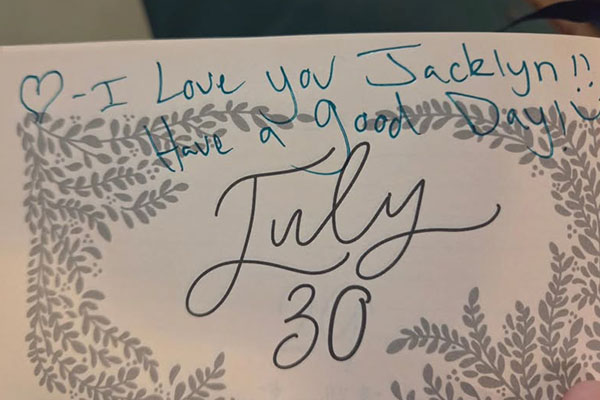
We are both artists. He's a rapper and a poet. I'm a poet and I also make other art. That was one of the things we bonded over. We continued going to open mic together. We performed together one time. We love to do a lot of the same things like outdoor things. We love to reach out to other addicts. We were volunteering for a while at Celebrate Recovery. Things were very good in the beginning. It seemed like, I say dreamlike only because I didn't think there was someone out there for me who could love me and just hidden love notes for me and stuff.
I never had an experience where he'd write me poems and songs. He was pretty fresh in recovery in terms of his clean time when we got together. I knew that going into it, but that is where things got a little fishy. He hadn't had enough time to adapt to dealing with life and emotions without that. That's where the challenge came in. Both of us have a lot of abandonment trauma and stuff like that was coming into play. When your life experience is negative, it's hard learning how to interact differently than when you've been “trained.”
Did he have a relapse?
He had a few. It was like a couple months into our relationship the first time, then he would sober up. Some time would pass and it would happen again. Part of that is we loved each other when we wanted to work through things but there was some stuff that would trigger him or would trigger me. That was because of our past trauma. When we would have a misunderstanding, it was difficult. Both of us are still learning how to navigate those emotions in a healthy way. He did have relapses on fentanyl and this was uncharted territory for me.
I have had two loved ones die from fentanyl overdoses. It was very triggering, especially navigating that in a new relationship. We knew from the beginning that this was it for us. We're in our 30s. We're not messing around. I knew we were going to work this through somehow. The difficulty was that there would be these lapses of time in between the relapses. You would start thinking things are normalizing, we're going to be okay and then it would happen again. When they're in that mindset, they're not being truthful at the time.
That was one of my indicators that he was in a relapse because he's a very honest and empathetic person. I could tell the behavior change. The way he would talk to me would become more negative. I felt like the truth was missing. He'd go to the store and be gone in a few hours. I'd be like, “Are you still at the store?” “They didn't have what I needed so I had to go to two other places.” You start being like, “Are you sure?” I’d find out that he was high. I know from being an addict how scary it is to admit that. How scary it is to go to your loved one and say, “I messed up.”
Part of the trauma for me was the lies in the midst of it and trying to figure out, “Am I being lied to now?” He was always very sorry. He was always very like, “I don't want this life. I don't want this.” I believed the whole time that he wanted help. He wanted out of it. I could sense that. For anyone who's lived on that side of it, you come home and the apartment is a mess and your loved one is not themselves. It's very traumatizing. Trying to understand this is not the real them and to see the enemy is not this person I love. The enemy is the addiction. You can become very codependent in the midst of that.
When your loved one isn't themselves, it's very traumatizing to understand this isn't the real them. The enemy isn't the person you love; the enemy is the addiction. Share on X
The Turning Point: From Outpatient To Incarceration And Deeper Healing
That was very well said. You're going through this. You know that you guys were meant to be together and you can see both signs of it. However, it's traumatic for you. It's always traumatic seeing somebody that you love. One of the things that you had said is that now you understand how family felt. It's just interesting seeing both sides of it, but there was a turning point. He went into rehab a couple times, but there was a turning point in all of that.
He started out in an outpatient. He was in Brick House and I'm now in their family support services. He was there and, unfortunately, he relapsed and went to jail. That's when we both were like, “Outpatient is not enough.” He was in Adult and Teen Challenge for three months and that was a good time for both of us. He had a brotherhood there, classes, and counseling. He loved it there. I visited him every week. We got to talk on the phone three times a week.
At this point, we were just engaged. They made an exception for us to talk. I just felt like he was coming alive. I felt like I was healing from the trauma but I could tell. I think in the beginning, I would say all addicts are hesitant to do treatment because you have to give up everything. In the beginning, I felt like he was partially doing it for me, for us but as time went on, I started to see that he was doing it for himself, if that makes sense.
Addicts hesitate to seek treatment because it means giving up everything. Share on X
That's so important. Once you decide that you're doing it for yourself, that's when the change comes. I'm not saying it's easy but you have more skin in the game because you're not only doing it for others and people that you love. You believe that you can make this change.
I even told him that when I went to rehab, and he's been to treatment before, but this was a year-long program. That was the difference and it was a faith-based program. I told him I had to give up my apartment, my job and my relationship. Everything. He knew that he would have to be away from me for a year, but you get to that point of desperation of what you want. If you want to be free, you have to stop kidding yourself.
I saw him starting to transform and be honest. A piece of the puzzle too for him is that he's felt on his own a lot of his life. It took some learning and growing to feel safe opening up to people. When you feel like you're on your own, you just adapt to being on your own. That was a key thing, too. It’s learning how to communicate to other people what's going on inside of you.
At what point is this in the relationship when you have this journey point, when he's doing it for himself now? He's taking ownership.
A Shared Valley: Supporting Each Other Through Relapse And Trauma
I would say that I went downhill again. Do you want me to talk about that?
I just want to say, it's not easy. It's a little like a roller coaster. He's doing good. Addiction is very difficult. We're going to talk about redemption and where you folks are now. However, it's important for people to understand the journey. If you want to share more or else we could go on to how he's doing and how things started happening once he was arrested, but you can talk about how it got to that point that he was arrested.
One thing I will say is that it's important to acknowledge that both parties are going through the valley. At the same time, I was struggling. I had a couple relapses on self-harm for example, because of everything going on. I just want to say I don't look at it as, “My loved one did this to me. Look what they did.” Both of us are broken and both of us are on this journey together trying to figure it out as a team. That's key for people to remember. We all have character flaws and things we can change. I didn't necessarily handle everything the best. I just wanted to put that out there.
We all have character flaws and things we can change. Share on X
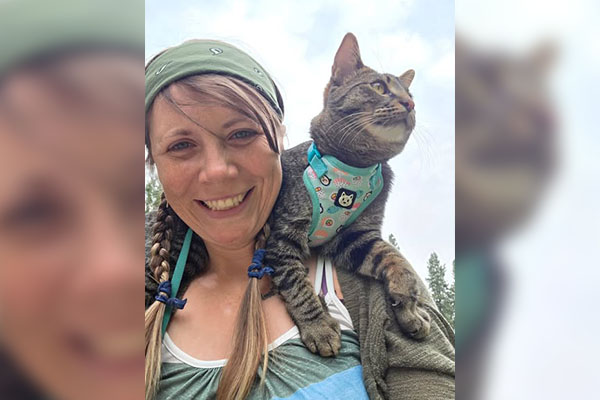
We do the best we can with what we know at the time and where we're at. As you said, it's a journey. Look how much you've grown. I'm just looking at you, you’re glowing. Your skin is good. Your hair is pretty. You put it nicely braided. You look great. That reflects what's going on, on the inside too and how far you've come. As you said, we've all made mistakes in our life. There's going to be the first to cast the stone. Kudos to you for everything that you're doing and even for sharing. It's brave to share. I know that you guys want to help others and we'll talk more about that.
At this point, he's relapsed a few times. He's gone in for help. There's been good times where he had clarity. We all know that sometimes or something triggers something and we relapse. He's gone through this. You've gone through it. You’ve been through it together and you're supporting each other. There comes a time when he does relapse and he gets arrested for that. You can explain it better.
He had a relapse in treatment. That was not hard drugs and they have a zero tolerance. Their policy is you leave for 30 days and then you can come back for a full program restart. I picked him up and that was in December. I could tell that the shame was getting him. He was beating himself up for messing up. He’s full of regret. He's like, “I had a good thing going. Why would I do that?” That was a tough time because I didn't know how to encourage him. It's hard to talk someone out of that shame cycle. At the same time, we were also in a good place in our relationship. We did make the decision to go ahead and get legally married during that time.
We felt like that was the right thing. We prayed about it and we just had a little living room ceremony with twelve people. It was beautiful, but sometimes good and bad things coincide. That shame is a nasty thing. He relapsed on December 31st and January 1st is when he overdosed and I found him. I am CPR trained and I know how to use Narcan and I keep Narcan. I wish I had told everybody to keep Narcan because you never know. He did die and I gave him one dose and then the EMTs gave him four. I found out later that most people don't make it past three and five is in the Bible. It’s the number of grace.
He came back after turning blue and something changed in him. He went back to treatment for a month, and he was different. Even his family could see the way he was talking. He just felt like, “I'm alive for a reason.” Unfortunately, he still had to go to court because he was court ordered to treatment. When they found out he'd left treatment, he got called to the court.
They knew about the overdose from the police reports and they concluded that treatment was insufficient for keeping him clean. He got three years fixed and four years determinate. They took his last rider and counted it towards his time and they took him immediately. We didn't even get to say goodbye. That's pretty devastating. It’s an understatement.
Finding Strength: Building A Support System After A Life-Altering Event
I just can't even imagine what you've gone through. The way that you tell the story so candidly and that was one of the reasons that I wanted to talk to you because I heard you speak before. It's so empowering. However, you need to be there with your husband and go through that. How did you make it through yourself? What support did you get? How did you get through it?
I've built a pretty awesome support system over the years. I had support emotionally, but after his overdose, that’s what kick started me to joining Al-Anon, Brick House Family Support, and Prison Families Alliance. I got desperate because that's not just a relapse. That's like, “He should be dead now.” It wasn't just the prison. At the same time, somebody told my apartment management that there was drug use in this department and I got kicked out for that. I couldn't get into another place soon enough and I had to leave my community behind and move in with my family.
All of those layers, I knew that I needed deeper support. I needed to talk to people who can relate exactly what I'm going through because people saying, “I'm so sorry you're going through that,” wasn't enough and the PTSD episodes, the breakdowns, and the night terrors. Unfortunately, I feel blessed that I'm in a situation where my spouse is very supportive. He had already had that month back at treatment. He knew going into court, he was willing to face whatever they gave him. He had that attitude about it.
When I fell apart, he was able to be there for me in some aspects. I realized that even though he was there for me, that there was something he couldn't understand because he wasn't conscious when it happened. He wasn't on my side and as sorry as he is. I felt like he's been growing from that point. I had to find support. I've been processing my grief in these support groups and these Zoom meetings, where I feel like I can fall apart and break down and say, “This is how I'm feeling.”
I was able to open up and say, “I relapsed on self-harm,” to a group of people who were holding space for that not shaming me. They’re like, “I feel you because I'm going through the same thing.” That validation. I love the quote, “Grief demands of witness.” We can't keep it inside. It will explode. Even though my husband has been supportive, there were times where because he's only four and a half months clean, he's still in his own healing journey incarcerated. There were times where I had to be sensitive to that.
Stronger Together: Overcoming Addiction And Incarceration With Love With Jacklyn Eva Share on X
I can't always bring up what happened because then that makes him feel like, “I ruined her life.” I don't want him to go down that shame spiral. That's where we have to work together. It's like, “I can be here for you to this point, but then I need to go get help elsewhere,” if that makes sense. That's the nuance in figuring that out as we go. It’s like, “Maybe now I don't have it. I'm going to go to my support group instead.”
The Power Of Community: Healing And Processing Grief In Support Groups
That makes total sense. Being around other people that understand, especially in a compassionate, non-judgmental, safe place with other people that have been through it. That's very important. You talked about Brick House, Al-Anon, and Prison Families Alliance. It sounds like those groups have been very helpful. On transparency, I'm with the Prison Families Alliance. That's how we met. I'm just grateful that it was helpful and supportive to you.
The other groups offer additional support for other things that you're going through. I just have so much respect for you, for everything that you're going through and for sharing. A lot of us that haven't been through that can't imagine. We need to listen with empathy and understanding because it could happen to anybody. It could happen to a loved one and you explain it so eloquently of what you went through and your healing process. You can't do it alone. You need support and you need to take action.
You need to take action and take those steps to reach out, no matter how scary it is because you don't know what these people are going to say. If you do get out there and it's not the right group. Find another group. You don't want to be around people that are judging or don't understand. You said that you were able to go back to your family, so you were able to maintain a relationship with your family after everything, too.
My family loves my husband. There were people that didn't understand why we got married or were scared for us, which makes sense. Look at the situation. They were just concerned. They just wanted us to succeed. I've realized it is so key to surround yourself with people who can be there for you now. For some people, it takes them a minute because they're just like, “This is too much. I'm scared for you.” Even though I can validate their concern and be like, “I understand where you're coming from.” In the thick of the crisis, we had to be selective about who was in our inner circle based on the people who had the capacity to be that support that we needed them to be.
People who were speaking concerns, we would just say thank you but those were the people we could go to, if that makes sense. They couldn't. They didn't have it at that time. Instead of wasting our energy trying to get support from people who couldn't do it, we turned to the people who could. That's been an important lesson for both of us in boundaries and realizing. First of all, we don't have to tell anybody anything. We don't have to tell everybody everything. We get to pick who we trust now. In the middle of it, I had to pull back from a lot of people who couldn't be there right then. That's okay. I don't fall anybody for that.
Instead of wasting energy seeking support from those who couldn't give it, we turn to those who could. Share on X
I've come to realize that a lot of people meaning well say the wrong thing, and they don't know that they're saying the wrong thing. It's better to just forgive them and go elsewhere. It doesn't help me to be angry that they couldn't say the right thing. Both of us have had to learn that the hard way by being disappointed. We are blessed to have family in our lives. I was so blessed about how many people were reaching out to him, writing him letters and phone calls. He said he's never had that before.
That's just a testament to the community that we've built together. Instead of focusing on the people who aren't able to do that, focusing on the ones who have come out of the woodwork. Text messages, calls, thinking of you, and praying for you has been key to both of us in recovery and healing from this. It’s changing our perspective from how many people weren't there for us, to how many people were there for us.
Sustaining Connection: Dreams And Plans For The Future During Incarceration
That makes total sense. I just want to go back to when you said that your family loves your husband. They love you too, and that's important. Sometimes that goes without saying but I wanted to bring that out. It's wonderful that they're there and they support you. You're right, some people are going through their own stuff or they don't have the capacity. Kudos to you folks for figuring that out. Some people don't ever figure that out. They walk around upset that people aren't helping them.
As you said, you find the people that do have the capacity and the people that can support you. Thank you again for sharing that. I want to go on to how you folks are keeping your love alive, your hope, and your healing while he's incarcerated. I know there's a lot of things you folks are working on. You have hope and dreams for when he is released.
That is a non-negotiable key, especially with a marriage. Even though it's expensive, we have to talk every day because we need it and that has been helpful. Even though we can't share every little thing that we are going through on a daily basis. Being able to share the highlights of the highs and lows and still share life together as much as you're able to. We love to dream. We're both dreamers. We had started writing a song together that is going to be about our story. I'm going to sing and he's going to rap.
We talked about, “Why don't we work on that while your incarcerated? It will be our little project. We can send it.” Back and forth ideas. We’re also planning a little mini vacation to the Oregon Coast when he gets out. Something to plan together and look forward to. We both love the ocean. I just think it would be good for us to just have that. We still talk about what we want to do and be. We want to have kids. We want to have ministry. We want to on trips, see the world, and go camping. We want to do all the things.
Instead of just being so defeated about, “We're losing all this time.” It's like, “This is going to be a drop in the ocean compared to the life that we can still have after this.” Also, being open about where we're at emotionally and listening. It can be hard for him there. It's negative. There's people war storing every day. It's hard for me out here going through the PTSD. Sometimes, you can come into an interaction with that negativity and set up to almost oppose the other person. If you pull back and go, “Where are they coming from?”
When he explained to me like, “I am only four and a half months clean. Give me a break, please.” I realized I can't expect him to act like someone who's eight years clean. He's doing pretty good for somebody who's only four and a half months but there has to be grace for that or him for me understanding that PTSD doesn't go away in four and a half months. Both of those things of taking the time to hear the other person and not just being angry.
We talked and he said, “Finding the light-hearted moments is so important. Remembering to laugh, flirting.” He likes to write little emojis on his thumb during a video and he'll just randomly pop up with a smiley face on his thumb. It's hilarious. Being able to not all heavy all the time, because it's been so heavy. There's going to be times where you're going to be grieving, but that's something we've been working on. It’s trying to bring that lighthearted into it and remembering like, even though we're not together, we're together. We can do our best to do life together even if it's not the way we want it to be.
Finding the light-hearted moments is so important. Share on X
I just love how you both are communicating and staying connected, have these hopes and dreams and things that you're going to be doing. It's not just hopes and dreams, but you're planning for it now. You're putting those plans together while he's incarcerated. It's not something that we're going to wait till you gets out. These are things that all are being put in motion by talking about it, planning and also by some of the ministry that you guys want to do.
You want to help other people that are going through this. Who better to help other people than somebody that's been through it and it's coming out the other side? Think of all the people that have helped you that you're that person that's helping others. He definitely wants to stay with you on your journey. When he is released, we can talk again if you folks want to. It's showing how you taking things and put them into action. You just can't wish for things. You've got to take action. Have you seen him? Are you able to visit him?
Overcoming Distance: Maintaining Connection And Planning For The Future
Unfortunately, we can't do in-person visits until he's transferred and he's still waiting on transfer. I haven't seen him since January. That's one of the things I grieve on a daily basis. He's my best friend and despite both of our shortcomings, we love each other. That's one of the things we look forward to. I promised him I would visit him at least once a month. I also found out about Prison Visitation Fund.
They assist with travel and lodging. You put the application in on their site, Prison Visitation Fund and put that application in. If they can, they want to support people to keep families together. That would be great. How far away will he be? Do you know?
It depends on where he ends up. It could be anywhere between 2 to 7 hours away.
We don't know.
What encourages me is just that both of us are the kind of people that we don't want to just sit in the yuckiness and granted, as I said, there's tears and sadness. Both of us are already thinking, “What can we do now?” Not just two years from now, but what can we do that makes this feel worth it? I don't know if it is the right language but the redemption as you said. I had told you before that he started a Bible study with two guys and it's now 30 guys.
He just found out from a friend of ours. A friend of a friend who he doesn't even remember that was in with him was on the outside talking about this group, this men's group and how meaningful it was to them. That got back to my husband and he was so encouraged to know that he's already using his story to influence people now. Even though we're apart, we see that we're already doing something together. We're building this story that we get to give to other people. We could just focus on the loss and how much it sucks to not be together or we can focus on how many people we help with our story.
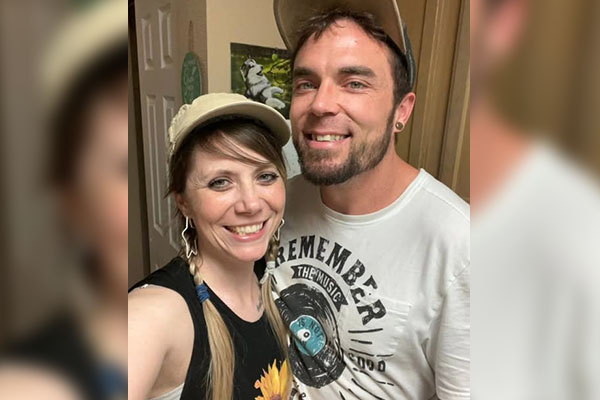
Take Today: Wisdom And Hope For Those Affected By Addiction And Incarceration
That's beautiful. I appreciate the time and sharing your story and so much information. I think that anybody that's reading this will gather insight. It will help them with whatever they're going through. In conclusion, wrapping up our talk. Are there any words of advice that you would like to give to the readers? A little something that could help them get through the day or if they're dealing with somebody that has an addiction or is incarcerated. They can help them not only help themselves, but also in some way help their loved one.
It's interesting you say that because I'm going to steal a verse that was given to me in one of my family support meetings. They said, “Take today. If they're sober today, take today. If today's a good day, take today, because if we're so future tripping of how hard this is going to be or what's going to happen, or what if something bad happens? We miss out on the moments that are beautiful even in this difficult season.” That was what I needed.
It was to realize this isn't just, “We'll get through this in /two years and then our life will start.” Our life starts now. That's what I would encourage anybody in this situation, take today. That's similar to any twelve-step group. They say, “Only for today.” It's the same for us being loved ones. Don't miss out on what you can have with them now just because you're afraid of tomorrow.
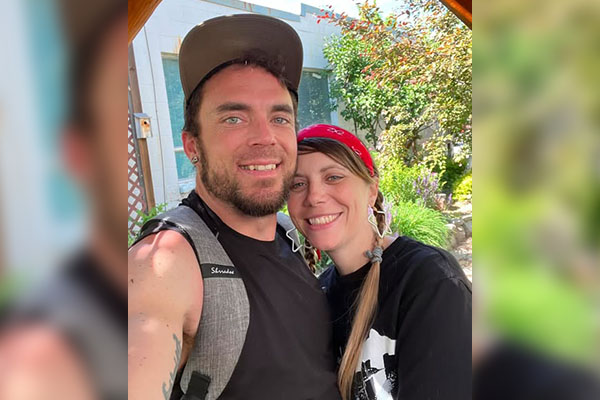
Well said. Thank you so much Jacklyn Eva. It's been a pleasure spending time with you. We'll stay in touch. If somebody does want to get a hold of you, do you want to share any of that information?
I started my own public profiles on TikTok, YouTube, Facebook, and Instagram. It’s at @Eva.Jacklyn and @Eva.Jacklyn.IG on Instagram because somebody else already had the handle. That's just where I get to talk about recovery. My heart is just life. Everything I've learned from life, I want to help even just one person. It's not about likes or followers. It's about the one person who needs to hear that there's hope now.
It's like the starfish story. A little girl, she saved that one and that's you. Thank you so much.
Thank you.
Important Links
- Jacklyn Eva on Instagram
- Jacklyn Eva on YouTube
- Jacklyn Eva on TikTok
- Jacklyn Eva on Facebook
- Brick House Recovery
- Al-Anon Family Group
- Adult & Teen Challenge
- Celebrate Recovery
- Prison Visitation Fund
- Prison Families Alliance
- Adult & Teen Challenge PacWest
- Prison The Hidden Sentence
About Jacklyn Eva
 Jacklyn Eva is a motivational speaker, author, social media influencer, and recovery activist. As a survivor & overcomer of many traumas & addictions, she uses her life experiences and faith to give hope & encouragement to others. She and her husband boldly share their vulnerable story of battling addiction & incarceration, and they hope to create a book, podcast & ministry in the future reaching those affected by addiction and incarceration. Currently, she channels her healing through crafting for local markets and posting inspirational reels on social media.
Leave a Reply